Cheltenham Festival Betting Guide: Four Days of Strategy and Opportunity
 Available in US
Cheltenham is not just a racing festival — it is the single biggest betting event in the British jump racing calendar. The four days in March generate more wagering interest than most sports manage in a month. The atmosphere at Prestbury Park is unlike anything else in racing: the roar that greets the first horse over the last fence in the Champion Hurdle, the tension as the Gold Cup field turns for home, the collective agony when a favourite unseats at the third last. I have attended every Cheltenham Festival since 2018, and each year teaches me something new about how to bet on it. The full picture is in our guide to UK horse racing betting.
Racecourse attendance across Britain hit 5.031 million in 2025, with Cheltenham contributing a disproportionate share during its four-day festival. The betting market around the festival is fiercely competitive — liquidity is deep, information flows fast, and the pricing is sharper than at any other point in the jump season. Finding value at Cheltenham requires preparation, discipline, and an understanding of what makes the course and its races unique.
The Four-Day Structure and Feature Races
Each day of the festival has a headline championship race that defines the card. Tuesday opens with the Champion Hurdle — the two-mile hurdling championship. Wednesday features the Queen Mother Champion Chase over two miles of fences. Thursday is Stayers’ Day, headlined by the Stayers’ Hurdle over three miles. Friday, the festival finale, culminates in the Cheltenham Gold Cup — the three-mile-two-furlong test that is widely regarded as the ultimate prize in jump racing.
Around these championship races, the card is packed with Grade 1 novice events, prestigious handicaps (the Coral Cup, the Pertemps, the County Hurdle, the Grand Annual), and cross-country races. The variety means there are opportunities across the full spectrum of bet types: championship races for form students, handicaps for value hunters, and novice events for those who follow the development of young horses through the season.
The sheer number of races — twenty-eight across the four days — means you cannot back something in every race without spreading your bankroll paper-thin. I typically narrow my focus to ten to twelve races where I have a strong opinion and leave the rest alone. Selective aggression, not blanket coverage, is how I approach the festival.
Form Angles Specific to Cheltenham
Cheltenham’s course is demanding in ways that standard form does not always capture. The uphill finish — one of the most gruelling in racing — exposes horses that lack genuine stamina. The undulations through the back straight test a horse’s balance and jumping technique. The ground, particularly in March after a wet winter, often rides softer than the official going description suggests.
Previous Cheltenham form is the most reliable predictor of festival success. A horse that has won or run well at the track’s October or November meetings has demonstrated it handles the unique demands. I weight Cheltenham-specific form heavily — a horse with a win at the track is worth more in my analysis than a horse with two wins at Kempton, even if the Kempton form is more recent.
Irish raiders deserve particular attention. The Irish dominate certain Cheltenham races, and the cross-channel form comparison is a skill in itself. Average turnover per race on Premier fixtures held steady in Q1 2025 even as overall turnover dropped, reflecting the concentrated interest in feature events. At Cheltenham, Irish-trained runners are priced by a market that sometimes underestimates their class advantage over British counterparts in specific race types — particularly novice hurdles and bumpers, where the Irish pipeline of talent is deep.
The going at Cheltenham in March can vary enormously — from good to soft in dry years to genuinely heavy after prolonged rain. Ground preference is a crucial filter for festival selections. I eliminate any horse from my shortlist that has not demonstrated it can handle soft ground, because even in years when the going is described as “good”, the track invariably rides slower than the same description at most other courses. Horses that need quick ground to perform at their best are running at a disadvantage before the tapes go up.
Festival Promotions and Enhanced Offers
Cheltenham week is when operators throw their biggest promotional budgets at racing customers. Enhanced odds, extra places on each-way bets, money-back specials on losing favourites, and free bet offers proliferate across every platform.
Enhanced place terms are the most valuable promotion for festival handicaps. If an operator pays six places instead of four on the County Hurdle (a twenty-plus runner handicap), the each-way value on outsiders improves materially. I compare place terms across my active accounts before every festival handicap and place my bet with whichever operator offers the most places. This takes five minutes per race and can be the difference between a profitable and an unprofitable festival.
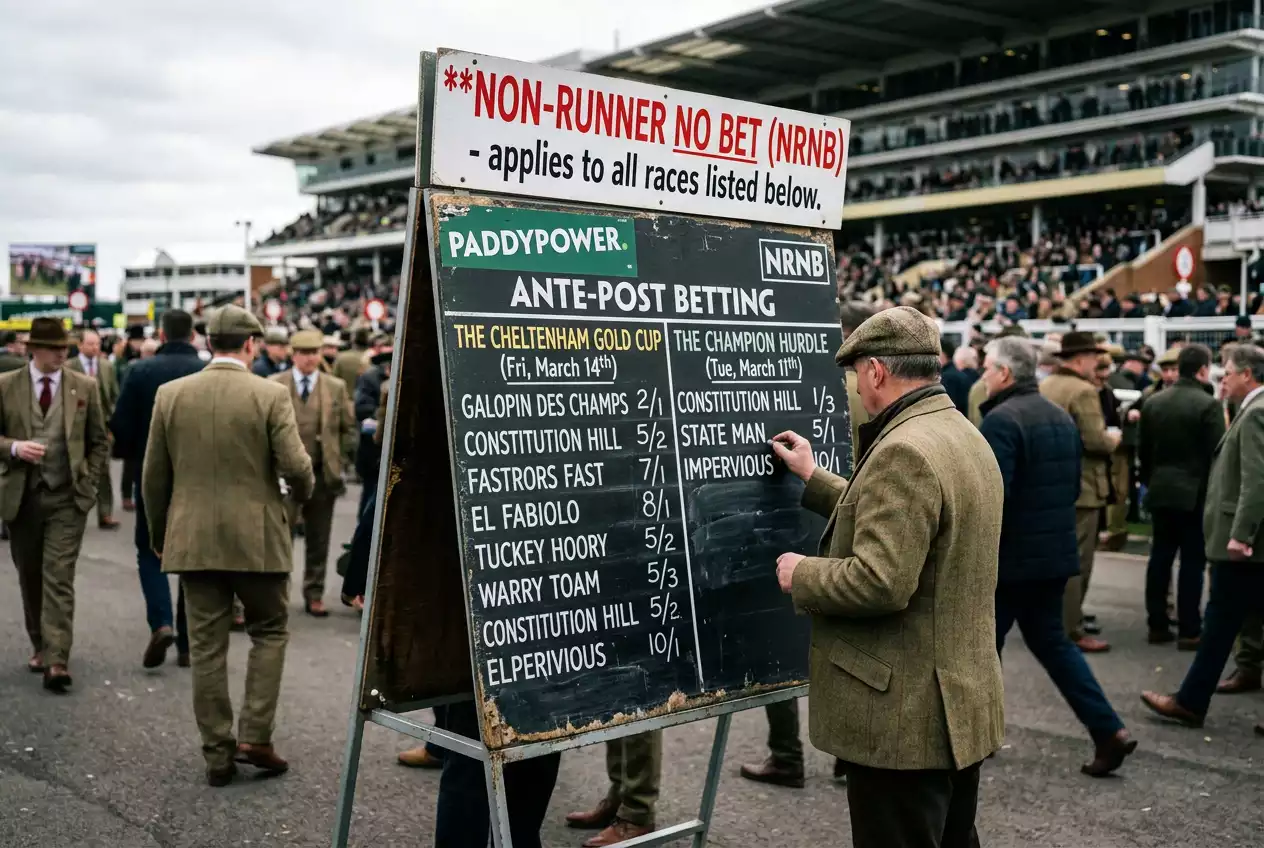
NRNB offers on championship races are standard during the festival build-up. The protection is worth taking on races where your ante-post selection is uncertain to run — particularly in the Gold Cup and Champion Hurdle, where going preferences and minor setbacks frequently redirect horses to alternative targets.
A Day-by-Day Approach to the Festival
My festival rhythm has evolved over the years. On Tuesday, I bet conservatively. The first day is a calibration exercise — I want to see how the ground is riding, how the track is playing (is the inside or outside rail favoured?), and whether the market is pricing Irish or British form more accurately. I might have one or two pre-planned bets but I keep my powder dry.
Wednesday and Thursday are where I commit more aggressively. By mid-festival, I have real-time information from the first day’s racing that the market has not fully absorbed. If the ground is riding softer than expected, I adjust my selections towards proven soft-ground performers. If front-runners dominated on Tuesday, I look for pace angles on subsequent days. This adaptive approach — adjusting in real time based on observed conditions — is the festival edge that preparation alone cannot provide.
Friday, Gold Cup day, is the grand finale. The temptation to bet heavily is strongest here, but discipline matters most. The Gold Cup field is small (typically eight to fourteen runners) and the form is well known — the market is at its most efficient, and the opportunities for value are correspondingly smaller. The real Friday opportunities are often in the supporting handicaps, where the crowd’s focus on the Gold Cup leaves the earlier races relatively underanalysed. For the other major betting event on the jump calendar, the Grand National playbook covers a very different challenge with its own set of tactical demands. The jumps code it belongs to: National Hunt vs Flat.
Which Cheltenham Festival day offers the best betting opportunities?
There is no single best day — it depends on your strengths. Tuesday’s Champion Hurdle card includes competitive handicaps where value can be found. Wednesday and Thursday offer the advantage of real-time ground and track information from earlier days. Friday’s Gold Cup card attracts the most attention but the supporting races are often where the smartest bets lie, because the market’s focus is on the feature.
Is ante-post or day-of-race betting more profitable at Cheltenham?
Both have advantages. Ante-post prices are bigger but carry non-runner risk. Day-of-race prices are shorter but reflect confirmed ground conditions and a known field. A balanced approach — taking one or two early positions at big prices and then adding selections on the day with full information — captures value from both ends.
Prepared by the Racing Horse Betting editorial staff.