Horse Racing Bet Types Explained: From Win Bets to Full-Cover Multiples
 Available in US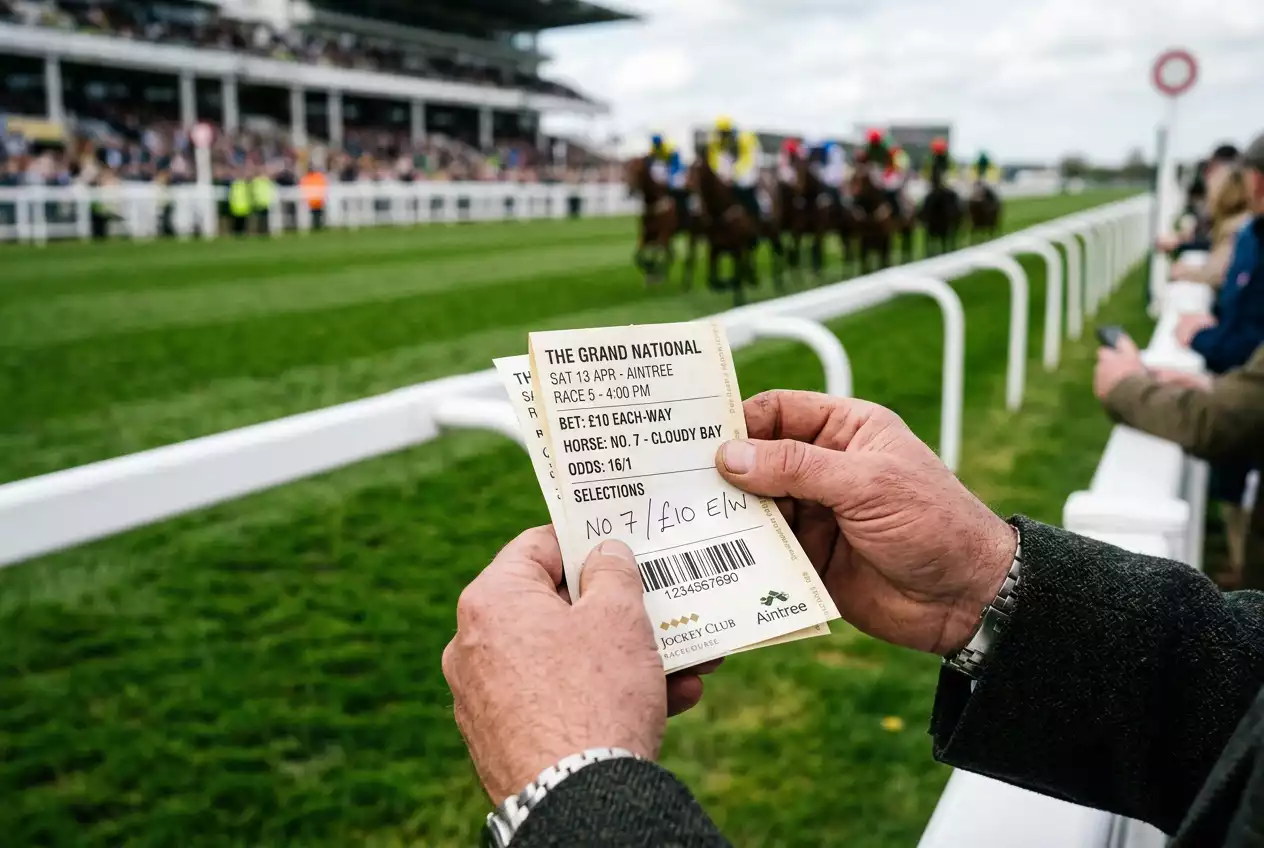
I once watched a man at Cheltenham tear up what should have been a winning slip because he had backed a horse to win outright when he meant to go each-way. The horse finished second at 14/1. He left roughly £700 on the table because he ticked the wrong box. That moment has stayed with me through nine years of analysing this market, and it captures something important: the gap between knowing a horse can run and knowing how to structure the bet around it is where most punters lose money before the race even starts. The full picture is in our guide to UK horse racing betting.
Horse racing betting in the UK generated £766.7 million in gross gambling yield from remote wagers alone during the 2024-25 financial year. That is an enormous pool of money, and the variety of bet types available is part of what makes it so deep. Yet for all that liquidity, a surprising number of bettors never move beyond the basic win single — and an even larger number misunderstand the mechanics of the bets they do place. Around 7% of UK adults bet on racing during peak season, rising and falling with the festival calendar. Many of those punters are casual participants drawn in by a big Saturday or a Cheltenham week, and they rarely get a clear explanation of what their options actually are.
This guide breaks down every mainstream bet type you will encounter at a UK bookmaker — from the simplest win single to full-cover multiples and pool-based forecasts. I have included worked examples with real arithmetic so the numbers are transparent, not hidden behind marketing language. If you already know what a Lucky 15 is, skip ahead. If you have never placed anything beyond a win bet, start at the top. Either way, the goal is the same: match the right bet structure to the right racing situation, every time.
Single Bets: Win, Place and Each-Way
The first bet I ever placed was a fiver on a horse called Doyen in the 2004 King George. It won, I collected at 5/2, and for about thirty seconds I thought horse racing was the easiest money in the world. That delusion didn’t last long, but the mechanism behind that bet — the win single — remains the purest form of racing wager you can make.
A win bet does exactly what the name suggests. You pick a horse, you choose your stake, and you get paid if it finishes first. Nothing else counts. If your selection runs second by a nostril, you lose your stake entirely. The simplicity is the appeal, but it is also the limitation. In large-field handicaps — the Cambridgeshire, the Cesarewitch, 20-runner Saturday handicaps at Newbury — backing the winner outright at single-figure odds is brutally difficult. The strike rate on win singles in races of 16 or more runners tends to punish all but the most disciplined selectors.
A place bet lowers the bar. Instead of needing your horse to win, you need it to finish in the places — usually the first two in races of five to seven runners, the first three in fields of eight or more, and the first four in handicaps of 16-plus runners. The trade-off is obvious: the odds are shorter. Bookmakers pay a fraction of the win price for place-only bets, typically a quarter or a fifth of the odds depending on the race conditions. Place betting is quieter, less glamorous, but it gives you a wider margin for error.
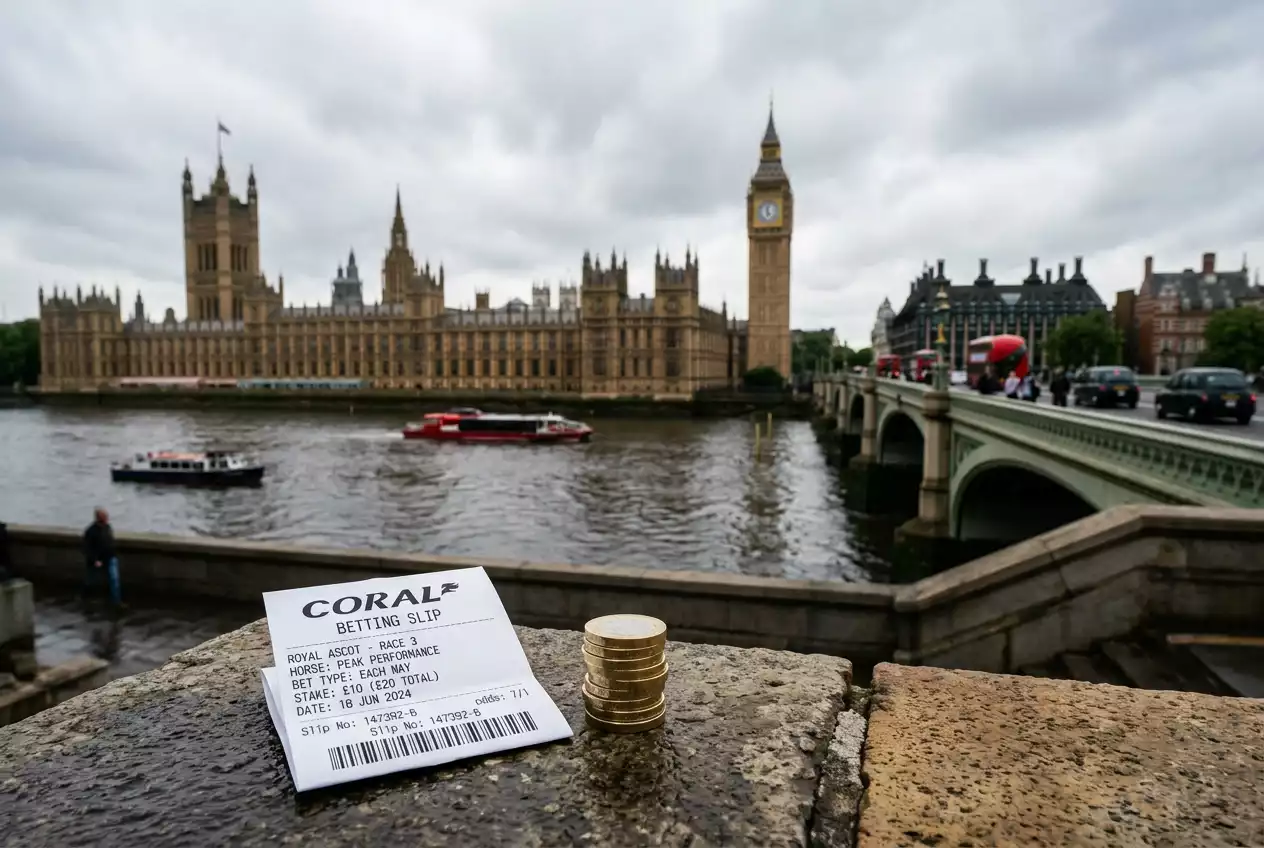
Then there is the each-way bet, which is really two bets rolled into one. When you place a £10 each-way wager, you are staking £10 on the horse to win and £10 on the horse to place — £20 total outlay. If the horse wins, both legs pay. If it places but doesn’t win, you lose the win part and collect on the place part. If it finishes outside the places, you lose everything. Each-way betting is arguably the most important structural tool in a racing punter’s kit, particularly in big-field races where the place terms become generous. In 2025, 68% of racegoers in Britain were casual visitors or first-timers — each-way is often the first bet type they encounter, and understanding how the terms work makes the difference between a pleasant day and a confusing one.
Here is a quick worked example. You back a horse at 10/1 each-way for £5. Your total stake is £10. The bookmaker offers one-fifth the odds for a place in a 12-runner race. If the horse wins, you collect £50 profit on the win leg plus £10 on the place leg (10/1 divided by 5 = 2/1, so £5 at 2/1 = £10), plus both stakes back — total return of £70 on a £10 outlay. If the horse finishes second or third, you lose the £5 win stake but collect £10 profit on the place leg plus the £5 place stake back — total return of £15 on a £10 outlay, giving you a net profit of £5. The arithmetic isn’t complicated, but it is worth doing before you bet rather than after.
How Each-Way Terms Affect Your Return
Not all each-way terms are created equal, and this is where casual punters get caught. The place fraction and the number of places paid vary by field size, race type, and sometimes by the individual bookmaker’s promotion on a given day.
The standard terms across UK bookmakers look roughly like this. In non-handicap races with five to seven runners, places are paid on the first two at one-quarter the odds. In fields of eight or more, it is typically the first three at one-fifth the odds. Handicap races with 16 or more runners usually extend to four places at one-quarter the odds. Some festival races — the Grand National being the classic example — may pay five or even six places, though the fraction drops accordingly.
The crucial point is that place fractions reshape the value equation entirely. A horse at 8/1 in a 20-runner handicap with one-quarter-the-odds place terms gives you effective place odds of 2/1. That same horse at 8/1 in a nine-runner conditions race with one-fifth-the-odds terms gives you place odds of just 8/5. Same horse, same price, different each-way value. I have seen punters back the same horse each-way across two different race types in the same week without ever noticing the terms had shifted underneath them.
Where each-way really shines is in big-field handicaps where you identify a horse whose place probability exceeds the implied probability of the place odds. That is a technical way of saying: if you think a horse has, say, a 35% chance of finishing in the first four, and the place odds imply only a 25% chance, the each-way bet has positive expected value on the place leg alone. The win leg becomes a free shot at a bonus. This is the core logic behind each-way value betting, and it is a concept I will keep returning to across this guide.
One trap to watch: bookmakers occasionally advertise “extra places” as a promotion. Paying five places instead of four on a 20-runner race sounds generous, and it can be — but check whether the fraction has been reduced from one-quarter to one-fifth or even one-sixth. If the fraction drops alongside the extra place, the overall value may be neutral or even worse than standard terms.
Multiple Bets: Doubles, Trebles and Accumulators
A few years ago, a friend sent me a screenshot of a 35p five-fold accumulator that returned just over £4,000. He was thrilled. What he didn’t show me was the graveyard of losing accas that preceded it — months of £1 and £2 stakes that quietly drained his account. That is the seduction of multiples in a single image: spectacular when they land, invisible when they don’t.
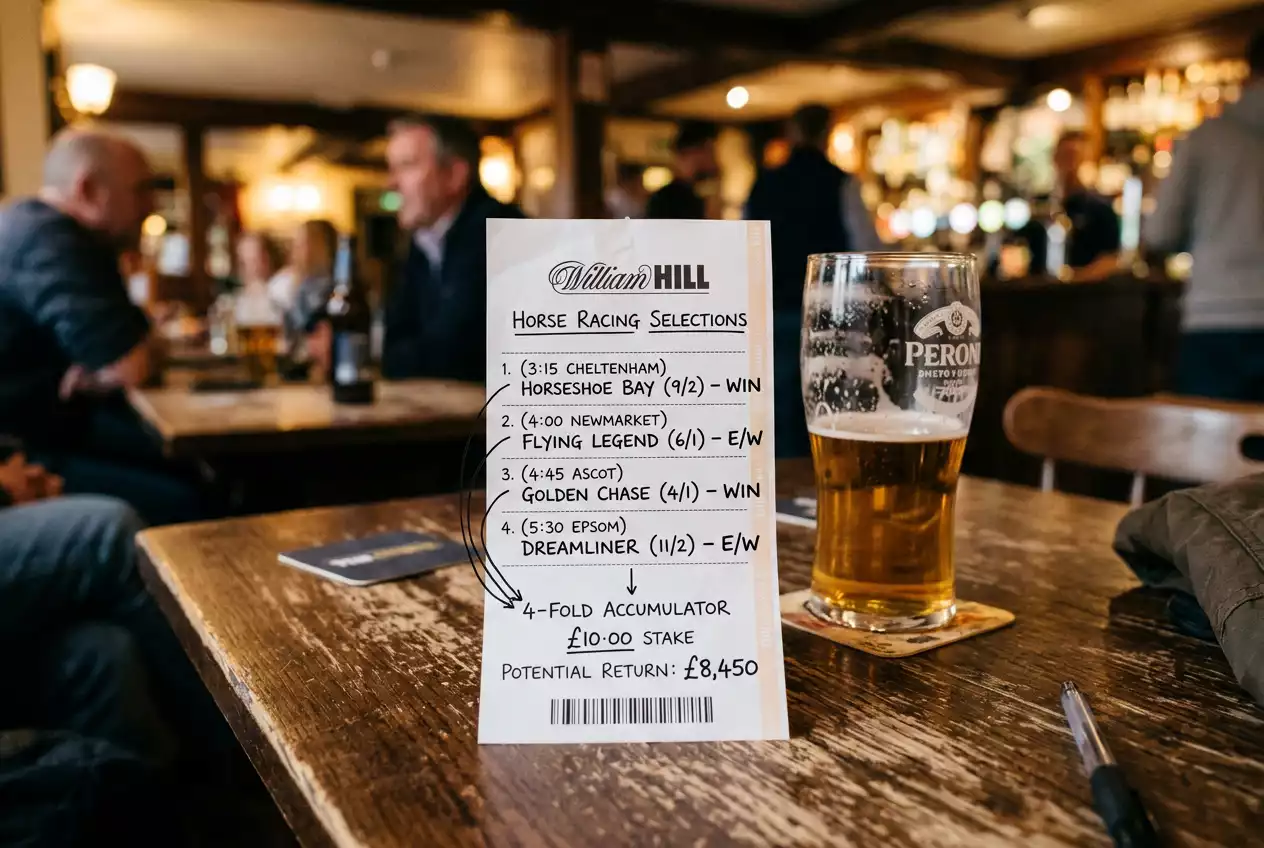
A double links two selections. Both must win for the bet to pay. Your returns from the first winner roll onto the second as the stake. If you back Horse A at 3/1 and Horse B at 5/1 in a double for £10, a winning double returns £10 multiplied by 4 (3/1 as decimal) multiplied by 6 (5/1 as decimal) = £240. That is £230 profit on a £10 stake. The appeal is obvious. The problem is that the probability of two independent events both occurring is the product of their individual probabilities — so if each horse has a genuine 25% chance of winning, the double has a 6.25% chance. Most punters overestimate the probability of multiples landing because they focus on the payout rather than the probability.
A treble adds a third leg. Same mechanics, compounded returns, lower probability. Beyond three legs, the industry uses the term accumulator — colloquially “acca” — to describe any multiple of four or more selections. Four-folds, five-folds, six-folds, and beyond all follow the same compounding logic. The mathematics are relentless: every additional leg multiplies the return but also multiplies the probability of failure.
I track my own multiples rigorously, and the data is humbling. Over a five-year sample, my win-singles showed a level-stakes profit. My doubles showed a small profit. My trebles broke roughly even. Anything above three legs was a net loss. That pattern is consistent with what most serious analysts find: the bookmaker’s margin compounds with each leg, so by the time you reach a five-fold, you are fighting against a cumulative overround that makes sustained profitability extremely difficult.
Does that mean you should never bet multiples? No. But it means you should treat them as occasional high-variance plays rather than a daily strategy. Small-stake accumulators with strong-opinion legs can be entertaining and occasionally profitable. Large-stake accumulators are a fast way to erode a bankroll. The discipline is in the sizing: if you wouldn’t be comfortable losing the stake ten times in a row without a return, the stake is too high for the number of legs you’re running.
Full-Cover Bets: Lucky 15, Yankee, Heinz
Full-cover bets are the Swiss army knife of racing multiples — they combine every possible combination of doubles, trebles, and accumulators from a given set of selections, and some include singles as well. They cost more than a straight accumulator, but they pay out even if one or more of your selections lose. That built-in redundancy is what makes them popular for festival racing, where punters often have strong opinions across multiple races but don’t want a single defeat to wipe out the entire bet.
The three most common full-cover bets in UK racing are the Lucky 15, the Yankee, and the Heinz. Each is named for its total number of bets, and the structure scales with the number of selections.
A Yankee covers four selections in 11 bets: six doubles, four trebles, and one four-fold accumulator. No singles. That means you need at least two of your four selections to win before you see any return. The advantage over a straight four-fold is that you collect something even if one or two horses let you down. The disadvantage is the cost: an 11-bet Yankee at £1 per line costs £11 total. If only two of four win at moderate prices, your return may barely cover the stake.
A Lucky 15 adds four singles to the Yankee structure, giving you 15 bets on four selections: four singles, six doubles, four trebles, one four-fold. This is where it gets interesting. Because the singles are included, you get a return if even one of your four horses wins. Most bookmakers also offer bonuses on Lucky 15 bets — a consolation payout if only one selection wins, and a percentage bonus if all four win. Those extras vary between firms, and they can shift the value of the bet meaningfully. A Lucky 15 at £1 per line costs £15, but the safety net of the singles makes it a more forgiving vehicle than a Yankee for punters who want broad coverage across an afternoon card.
A Heinz scales to six selections and 57 bets: 15 doubles, 20 trebles, 15 four-folds, six five-folds, and one six-fold. At £1 per line, that is a £57 outlay. The permutation count climbs sharply. Beyond the Heinz, you encounter the Super Heinz (seven selections, 120 bets) and the Goliath (eight selections, 247 bets), but these are niche products — the cost of entry is high enough that most recreational punters won’t use them regularly.
The practical question is always the same: does the full-cover structure give you better expected value than placing the equivalent stake as individual singles or targeted doubles? In my experience, the answer depends on your confidence distribution. If you genuinely believe all four of your Lucky 15 selections have a better than 50% chance of winning, a straight four-fold accumulator offers a higher ceiling. But if your honest assessment is that you fancy all four but wouldn’t be shocked if one or two got beaten, the full-cover structure protects your downside. Festival racing — Cheltenham, Royal Ascot, the Grand National meeting — is where full-cover bets earn their place, because the quality of the fields and the unpredictability of championship events make single points of failure common.
Forecast and Tricast Bets
Forecast and tricast bets ask you to predict the exact finishing order. If singles and multiples are about picking winners, forecasts and tricasts are about ranking them — and the precision required drives up both the difficulty and the potential payout.
A straight forecast requires you to name the first and second-place finishers in the correct order. If you select Horse A to finish first and Horse B to finish second, you only win if exactly that happens. Reverse the order and the bet loses. A reverse forecast covers both permutations — A first and B second, or B first and A second — but it costs twice as much because it is two bets. A combination forecast extends the logic to three or more selections, covering every possible first-and-second pairing among your chosen horses. Three selections generate six permutations, so a combination forecast on three horses costs six times the unit stake.
A tricast raises the bar further: you must name the first three finishers in the correct order. The straight tricast is a single bet; a combination tricast on three selections is also a single bet (since there are six ways three horses can fill three positions, the cost is six units). Add a fourth selection and the combination tricast covers 24 permutations.
The returns on forecasts and tricasts can be extraordinary. In large-field handicaps, a straight tricast on three unconsidered runners can return hundreds of times the stake. I recall a Cesarewitch tricast a few years back that paid over £8,000 to a £1 stake. But the strike rate is correspondingly low. In a 16-runner race, there are 240 possible first-second combinations and 3,360 possible first-second-third orderings. The probability of nailing the exact tricast in such a field, even with good form analysis, is vanishingly small on any single attempt.
Forecast and tricast bets are settled at either the computer straight forecast (CSF) or the Tote returns, depending on the bookmaker and the bet type. The CSF is calculated by an algorithm after the race based on the starting prices of the placed horses, the number of runners, and the price of the favourite. It is not a fixed price you see before the race — you only know the payout once the result is confirmed. This lack of pre-race transparency is one reason why serious bettors approach forecasts as occasional speculative plays rather than core strategy.
One tactical note: forecasts and tricasts work best in races where you have a strong view on the likely front-runners but less confidence about which one will prevail. If you think three horses will dominate the finish of a six-runner conditions race, a combination tricast captures all the orderings at a manageable cost. In open 20-runner handicaps, the permutation count makes combination tricasts expensive and the probability of landing them almost lottery-like.
Betting Conditions: NRNB, Rule 4 and Dead Heats
You have picked the horse, structured the bet, placed the stake — and then something changes. A horse is withdrawn, the field shrinks, or two horses cross the line together. These situations are governed by a set of rules that every punter should understand before they bet, not after they discover the deduction on their return.
NRNB stands for Non-Runner No Bet, and it is one of the most valuable conditions a bookmaker can offer on ante-post markets. Standard ante-post rules mean your stake is lost if your horse doesn’t run — injury, change of plan, insufficient going conditions. NRNB removes that risk: if the horse is withdrawn before the race, your stake is refunded. Bookmakers typically offer NRNB on major festival races like the Cheltenham Gold Cup and the Champion Hurdle, but not on everyday ante-post markets. The distinction matters. Online betting accounted for around 65% of all horse racing turnover and just over half of gross gambling yield according to an earlier BHA analysis, meaning most punters are placing these bets remotely and may not fully register the conditions attached. Always check whether NRNB applies before placing an ante-post wager.
Rule 4 deductions apply when a horse is withdrawn from a race after the final declaration stage but before the off. Because the withdrawal changes the competitive dynamics — a missing rival effectively shortens the odds of the remaining runners — the bookmaker applies a fixed deduction to all winning payouts based on the price of the withdrawn horse. The deductions follow a standard scale: if the withdrawn horse was priced at odds-on (e.g., 1/3), the deduction can be as high as 75p in the pound. If it was a 14/1 outsider, the deduction might be just 5p in the pound. The scale is set by Tattersalls Committee Rule 4(c) and published by every UK bookmaker.
In practice, Rule 4 most often bites when a short-priced favourite is withdrawn late. If you backed the second favourite at 5/1 and the 4/6 favourite is pulled out, your effective odds drop significantly after the deduction. Multiples are particularly vulnerable: a Rule 4 deduction on one leg reduces the compounding return through the rest of the bet. There is no way to avoid Rule 4 deductions — they are a structural feature of the market — but being aware of them prevents unpleasant surprises when you check your return.
Dead heats occur when two or more horses cannot be separated by the photo-finish camera. They are rare but not as rare as you might think — British racing sees a handful each year. In a dead heat for first place, your winning bet is settled at half the odds. If you backed a horse at 6/1 and it dead-heats with another, your return is calculated as if the odds were 3/1 with your full stake, or equivalently 6/1 with half your stake — the result is the same. Dead heats for the places affect each-way bets similarly: if your horse dead-heats for third in a race paying three places, the place part of your each-way bet is settled at half the place odds.
With the horse population in British training yards contracting year on year — BHA data puts the 2025 figure at its lowest since at least 2022 — average field sizes have been dropping on both the Flat and over jumps. Smaller fields make every withdrawal more disruptive: losing one horse from a six-runner race transforms the competitive landscape far more than losing one from a 20-runner handicap. Understanding NRNB terms, Rule 4 mechanics and dead-heat settlements is not academic; it is practical self-defence in a market where late changes have an outsized impact.
Matching Bet Type to Race Scenario
Richard Wayman, the BHA’s Director of Racing, noted in early 2026 that attendances were heading upwards and prize money showed increases at all levels — positive signs for the health of the sport’s major meetings. But more people through the turnstiles also means more casual bettors facing the same question: which bet type suits this race?
The answer depends on three variables: the size of the field, your confidence in your selection, and your risk appetite for the day. Here is how I think about it.
In small fields of four to six runners, the market is tight and the prices are short. Win singles are the cleanest bet. Each-way offers limited value because the place terms are compressed — two places at one-quarter the odds in a five-runner race doesn’t give you much room. Forecasts and tricasts can work here if you have a strong view on the order of finish, because the number of permutations is manageable. A combination tricast on three selections in a five-runner race costs just six units and covers a meaningful share of the possible outcomes.
In medium fields of eight to twelve runners, each-way betting starts to become interesting. Three places at one-fifth the odds on an 8/1 shot gives you a place leg at 8/5 — not spectacular, but if you rate the horse’s place chance highly, it is a solid foundation. This is also the sweet spot for doubles and trebles: linking two or three strong-opinion selections across different races on the same card keeps the multiple short enough that the compounding margin doesn’t destroy you.
Large-field handicaps of 16 or more runners are where each-way and full-cover bets come into their own. Four places at one-quarter the odds on a 20/1 shot gives you an effective place price of 5/1. If you identify three or four runners you believe are overpriced for a place finish, a Lucky 15 or a series of each-way singles across those selections gives you multiple bites at the each-way value without needing any single horse to win. The Grand National, with its 40-runner field and extended place terms, is the ultimate laboratory for each-way multiples.
For ante-post markets — weeks or months before a race — the bet type is almost always a win single, ideally with NRNB protection. The prices are longer than they will be on the day, but the risks are higher: injury, changes in the going, supplementary entries that alter the market. Each-way ante-post bets are rare because the place terms are often not confirmed until much closer to the race. If you want ante-post involvement with downside protection, look for NRNB offers on the major festivals and keep the stakes modest.
The unifying principle is simple: let the race conditions choose the bet type, not the other way around. I see punters who always bet accumulators regardless of the card, or who always go each-way regardless of the field size. That rigidity costs them money over time. The best bettors I know switch between singles, each-way, doubles, and full-cover bets fluidly, matching the structure to the opportunity. The bet type is a tool. Use the right one for the job. The most common of them in detail: each-way betting.
Frequently Asked Questions
What is the difference between a forecast and a tricast in horse racing?
A forecast requires you to name the first two finishers in a race in the correct order. A tricast requires the first three in the correct order. Tricasts are harder to land but pay significantly more. Both can be placed as ‘straight’ bets with a single permutation or as ‘combination’ bets covering every possible ordering of your selected horses, which costs more but improves your chances.
When is a Lucky 15 bet better than an accumulator?
A Lucky 15 is better when you rate four selections strongly but accept that one or two might get beaten. It includes singles, doubles, trebles and a four-fold, so you still collect a return if only one or two horses win. A straight four-fold accumulator pays more if all four win, but returns nothing if even one loses. Lucky 15 bets also often carry bookmaker bonuses for all-four-winners or consolation payouts for one-winner results.
How do Rule 4 deductions work when a horse is withdrawn?
When a horse is withdrawn from a race after declarations, Rule 4 deductions reduce the payout on all winning bets to reflect the changed competitive conditions. The deduction is based on the price of the withdrawn horse: a short-priced favourite triggers a larger deduction than a long-priced outsider. The scale ranges from 5p in the pound for 14/1 or longer, up to 75p in the pound for very short-priced horses. The deduction is applied automatically by the bookmaker.
Can I place each-way bets on races with fewer than five runners?
Most UK bookmakers do not offer each-way terms on races with fewer than five runners. In fields of exactly five, six or seven runners, bookmakers typically pay two places at one-quarter the odds. Below five runners, only win bets are available. Always check the race conditions and place terms before placing an each-way wager, as these can vary between bookmakers and between promotions.
Created by the ”Racing Horse Betting” editorial team.