Horse Racing Going Explained: From Firm Ground to Heavy
 Available in US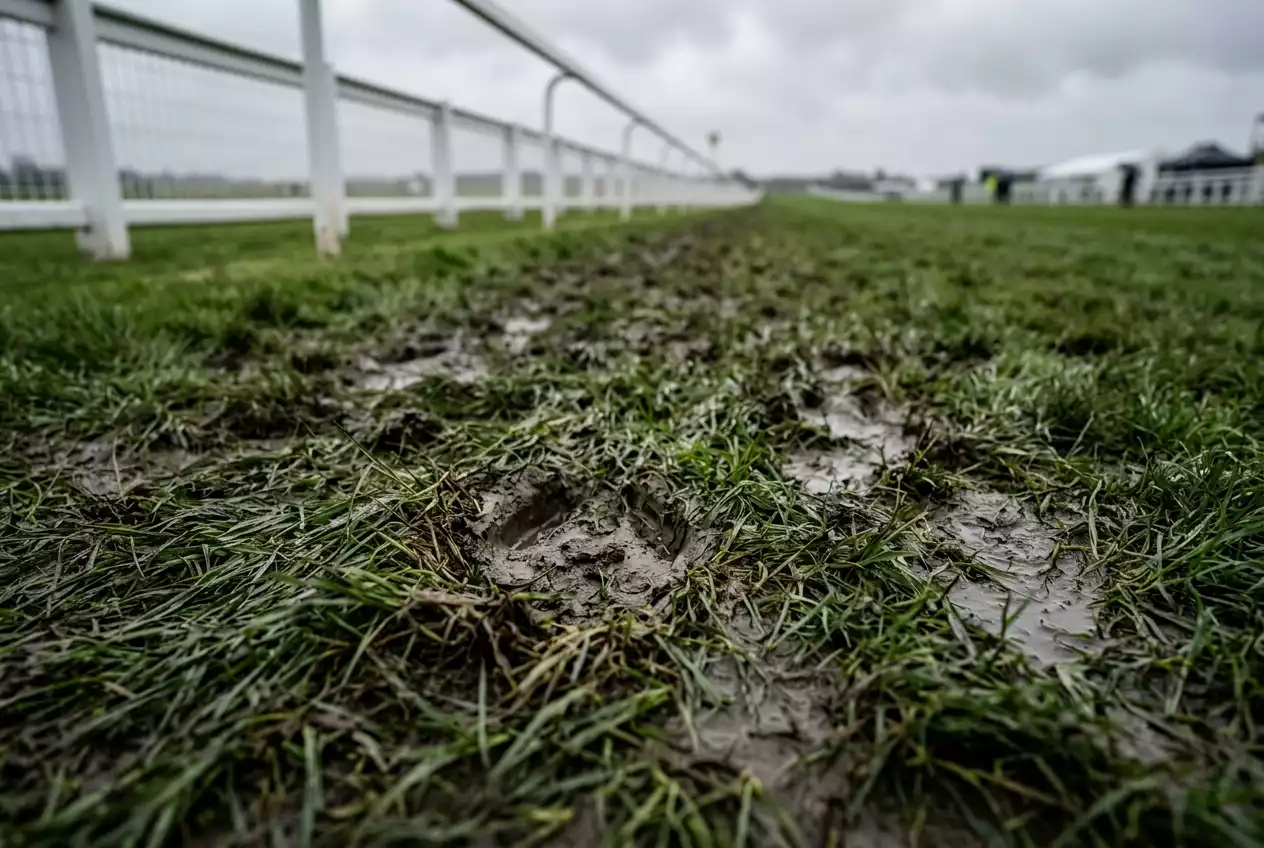
I once backed a horse that had won three of its last four races. Brilliant form, ideal distance, a jockey in red-hot form. It finished tailed off in last. The going had changed from good to soft overnight after unexpected rain, and this particular horse had never won on anything slower than good to firm. I had not checked the going. That was, to put it diplomatically, a learning experience. The full picture is in our guide to UK horse racing betting.
The going — the official description of ground conditions on a racecourse — is one of the most important variables in horse racing, and it is one of the most overlooked by casual bettors. Horses are athletes with distinct preferences. Some accelerate on fast, dry surfaces. Others dig in and power through deep, waterlogged ground. Ignore the going, and you are ignoring a factor that directly determines which horses perform at their best and which are handicapped before the race even starts.
The Going Scale: From Firm to Heavy
British racing uses a scale that runs from the fastest surface to the slowest. On turf, the official descriptions are: hard, firm, good to firm, good, good to soft, soft, and heavy. On all-weather surfaces, the scale is different: fast, standard to fast, standard, standard to slow, and slow. Let me focus on turf, because that is where the going has the most dramatic impact.
Hard ground is rare in Britain — you might see it a handful of times in a dry summer, and many trainers will withdraw their horses rather than risk injury on rock-hard surfaces. Firm is quick and suits horses with a low, efficient action that skims across the top of the ground. Good to firm is the most common summer going and favours speed horses. Good is the neutral baseline — neither an advantage nor a disadvantage for most runners. Good to soft introduces moisture; the ground is starting to cut up and will slow pace. Soft means the surface is noticeably wet, deep in places, and demanding on stamina. Heavy is a slog — only horses with specific aptitude for deep ground compete well in these conditions.
The descriptions are not precise measurements; they are subjective assessments by the clerk of the course, supplemented by data from the GoingStick. The same label — “good to soft” — can feel very different at Cheltenham (undulating, natural drainage) versus Lingfield’s turf course (flatter, heavier clay soil). Context matters. A horse that handles good to soft at one track may struggle with it at another.
How the GoingStick Measures Ground Conditions
Before the GoingStick was introduced, the going was determined entirely by the clerk of the course walking the track, prodding the ground with a heel, and making a judgement call. It was inconsistent, subjective, and occasionally controversial. The GoingStick — a penetrometer that measures the shear strength and penetration resistance of the turf — brought some science to the process.
The device is pushed into the ground at multiple points around the course, and the readings produce a numerical value. Generally, a GoingStick reading above 8.0 corresponds to good to firm or firmer. Between 6.0 and 8.0 is typically good. Between 4.5 and 6.0 is good to soft. Below 4.5 indicates soft, and very low readings signal heavy. These bands are guidelines, not rigid thresholds — the clerk still applies judgement, factoring in rainfall forecasts, drainage patterns, and the condition of the racing surface after earlier races.
GoingStick readings are published before racing begins and updated if conditions change. You can usually find them on the racecourse’s official website, through the BHA, or on data platforms. They are more useful than the verbal description alone because they give you a number you can track over time and compare across days and meetings.
One nuance that caught me out early in my career: GoingStick readings are taken at set positions around the track, but the going is not uniform across the entire course. The ground on the inside rail — where horses naturally race in tighter fields — can be chewed up by mid-afternoon, particularly on soft ground, while the ground further out may still be fresh. Some jockeys exploit this by racing wide to find better ground, and that tactical choice can make the difference between winning and losing.
How Going Affects Race Results and Speed Figures
The connection between going and results is not just anecdotal — it is measurable, and the data is striking. Horses in training in Britain numbered 21,728 in 2025, a continued decline, and BHA modelling projects a 6-7% reduction in the number of races by 2027 compared with 2024. As the sport contracts, the quality of analysis matters more, and going preferences are one of the most reliable analytical edges available.
Speed figures — ratings that adjust a horse’s finishing time for the going, course configuration, and wind conditions — expose the impact clearly. A horse that records a speed figure of 95 on good ground might produce an 82 on soft. That thirteen-point drop is enormous and often represents the difference between winning and finishing mid-division. When you see a horse with a speed figure that looks disappointing, check the going: if the surface was unsuitable, the figure may be misleading.
Some horses are ground specialists. Jumps horses with a high, round action often handle soft and heavy ground better because their stride lifts clear of the surface. Flat horses bred for speed — particularly sprinters — tend to prefer firmer going because their low, daisy-cutting action is more efficient on a quick surface. But there are exceptions in every direction. I have seen flat sprinters win on heavy and staying chasers hate anything worse than good. The only reliable indicator is a horse’s own record on different surfaces.
Going also affects race dynamics beyond individual performance. On heavy ground, the pace is slower, stamina becomes a greater factor, and front-runners who burn energy early are more likely to be caught late. On firm ground, speed dominates, races are run faster, and front-runners with tactical speed can control the pace and hold off challengers. These patterns influence not just which horse wins but how the race is run — which in turn feeds directly into form reading and building a horse profile.
Reading Going Changes During a Race Day
The going at the start of a race day is not always the going at the end. Rain mid-afternoon, the effect of previous races churning up the surface, or even unexpected sunshine drying out morning moisture — all of these can shift conditions race by race.
Clerks of the course are required to update the official going description if conditions change materially. These updates are announced to the betting ring and published online. In practice, the updates can lag behind reality — by the time the going is officially changed from “good” to “good to soft”, the ground may have been riding closer to soft for the previous race or two.
I pay close attention to two things during a raceday. First, the post-race comments from jockeys and trainers. If a jockey says “the ground was testing out there” after the second race on a card described as “good”, I know the going is worse than the official description suggests. Second, the visual evidence from the races themselves — are horses splashing through standing water? Are divots flying? Is the pace notably slower than the class of race would suggest? These real-time observations often tell you more than waiting for the next official update.
For bettors, going changes during a card create opportunity. If you have identified a horse later on the card that handles softer ground, and conditions are deteriorating, the market may not fully reflect the advantage that horse is gaining. The price might still be based on the morning going, while the reality has shifted in your selection’s favour. Staying alert to these changes — and acting before the market adjusts — is one of the quietest edges in horse racing betting. Where the going sits in the form line: reading form.
What does the going mean and how does it affect race outcomes?
The going is the official description of ground conditions on a racecourse, ranging from hard and firm through good to soft and heavy. It directly affects race outcomes because horses have distinct going preferences. A horse suited to firm ground may perform poorly on soft, and vice versa. Checking a horse’s form on the prevailing going is one of the most reliable ways to assess its chance.
How often does the going change between declaration time and race time?
It depends on the weather. In stable conditions the going rarely changes, but rain or rapid drying can shift it significantly between the morning declarations and the afternoon races. Clerks of the course update the official going when conditions change materially, and these updates are published online. Monitoring weather forecasts and in-race conditions helps you stay ahead of official announcements.
Published by the Racing Horse Betting team.