Ante-Post Betting on Horse Racing: Timing Risk and Reward
 Available in US
In October 2023, I backed a horse at 25/1 for the Cheltenham Gold Cup — five months before the race. By February, the horse was 8/1 in the day-of-race market. That felt like a triumph. Then, twelve days before the festival, the trainer announced a setback. The horse was withdrawn. My stake — gone. No refund, no consolation, no “better luck next time”. That is ante-post betting in its purest, most brutal form. The full picture is in our guide to UK horse racing betting.
Ante-post means betting on an event well in advance of the day it takes place, typically weeks or months ahead. The prices are bigger because you accept risk that does not exist in day-of-race betting: your horse might not run, the going might change, the race conditions might shift. Total betting turnover on British racing dropped 9% in Q1 2025 compared with the same period in 2024, and part of the squeeze comes from punters becoming more cautious about where they commit money. Ante-post, for all its appeal, demands that caution.
How Ante-Post Markets Differ From Day-of-Race Betting
I think of ante-post markets as the futures market of horse racing — you are speculating on outcomes that are months away, with incomplete information, and pricing in a layer of uncertainty that day-of-race markets eliminate. The core difference is simple: under standard ante-post rules, if your horse does not run, you lose your stake.
Day-of-race betting operates with declarations already confirmed. The runners are known, the going is reported, the jockey bookings are final. If a horse is withdrawn after you have placed a bet on day-of-race markets, you get your stake back or face a Rule 4 deduction on your returns. Ante-post offers no such protection by default.
The trade-off for accepting that risk is price. Ante-post odds are almost always longer than the eventual day-of-race price for horses that actually make it to the start. The market has to compensate you for the chance of losing your stake to a non-runner, and that compensation comes in the form of bigger numbers. A horse that opens at 16/1 ante-post might be 6/1 or 8/1 on race day — if it runs. The challenge is that many horses priced up months in advance never make it to the race.
The timing of ante-post markets varies by race. For the Cheltenham Festival and Grand National, markets open as early as the previous spring — meaning you can bet nearly twelve months ahead. For Group 1 flat races at Royal Ascot, ante-post markets typically become active in the weeks following the previous season. The further out you bet, the wider the price — and the greater the risk.
The Risks: Non-Runners, Injury and Seasonal Conditions
Every ante-post bet carries a portfolio of risks that simply do not exist once declarations close. Let me walk through the main ones because understanding them is the difference between calculated speculation and blind gambling.
Non-runners are the headline risk. Horses are fragile athletes. The number of horses in training in Britain dropped to 21,728 in 2025 — a 2.3% decline year on year and part of a steady contraction running at roughly 1.5% annually since 2022. A shrinking horse population means fewer potential runners, and every horse in an ante-post market faces months of training, gallops, and potential setbacks before race day. Muscular injuries, respiratory issues, poor form in trial races — any of these can lead to a withdrawal, and your money goes with it.
Going conditions add another variable. A horse backed ante-post for a spring festival might need soft ground to be competitive. If a dry spell firms up the ground, the trainer may choose to wait for another day rather than run on unsuitable terrain. You lose your stake, even though the horse is perfectly healthy — just not suited to the conditions.
Race conditions can shift too. Handicap marks change, entries for alternative races open up, and trainers reassess plans throughout the season. A horse entered for one race at Cheltenham might end up running in a completely different event — or not running at the festival at all. Your ante-post bet is on a specific horse in a specific race. If the horse runs elsewhere, your bet is a loser.
Supplementary entries work the other way. Sometimes a horse not originally entered is supplemented into a race at considerable cost, and that late addition can reshape the market. Your ante-post selection might suddenly face a rival it was never supposed to encounter.
When Ante-Post Prices Offer Genuine Value
Despite the risks, I keep coming back to ante-post betting because the value, when it is there, is extraordinary. The key is selectivity — you cannot ante-post every race on the calendar and expect to profit. You need to focus on situations where the price genuinely overcompensates for the risk.
The strongest ante-post value tends to appear in three scenarios. First, when a horse has an obvious target race that the trainer has publicly committed to. Statements like “everything this season is geared towards the Gold Cup” reduce the non-runner risk significantly, though they never eliminate it. Second, when a horse’s form profile — going preference, distance suitability, course record — aligns so closely with a specific race that the trainer has limited incentive to redirect. Third, when the market has overreacted to one poor run and the ante-post price has drifted to a level that does not reflect the horse’s overall ability.
A useful mental test: would you still back this horse at half the current ante-post price on race day? If the answer is yes, the ante-post bet is probably offering genuine value because you are getting double the odds for taking on a risk that, in your assessment, is manageable. If the answer is no — if the horse is only attractive because the price is big — you are probably being compensated for risk rather than backing a genuine contender.
Managing Your Ante-Post Exposure
After nearly a decade of ante-post betting, I treat it as a separate bankroll from my day-of-race activity. The stakes are smaller, the timeframes are longer, and the variance is brutal. Here is how I manage it.
I allocate no more than 10-15% of my total betting bank to ante-post positions. Within that allocation, no single ante-post bet exceeds 2% of the total bank. This means I can absorb multiple non-runners — which will happen — without crippling my ability to continue. Think of it like portfolio management: diversification across different races and different festivals limits the damage of any single withdrawal.
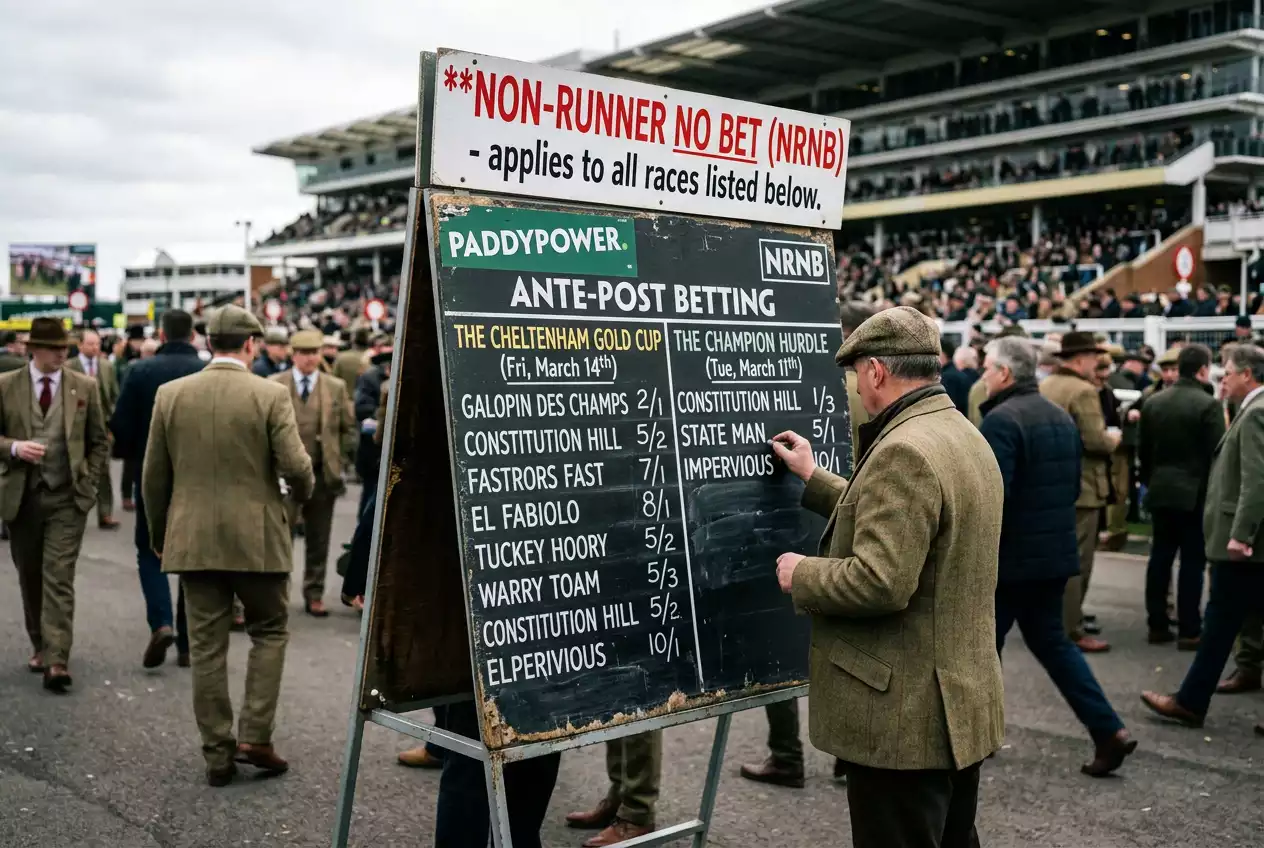
I also look for Non-Runner No Bet offers wherever they are available. NRNB markets remove the headline ante-post risk entirely — if your horse does not run, your stake is returned. The prices are shorter than standard ante-post because the operator is absorbing the non-runner risk for you, but in many cases the trade-off is worthwhile, particularly for punters who find the idea of losing a stake on a non-runner hard to stomach.
Timing your ante-post bets also matters. I tend to strike early — when the market first prices up a race and liquidity is thin — rather than waiting until the weeks before the event when prices have already shortened. The early bird does not always catch the worm, but in ante-post markets, the early bird consistently gets better prices because the risk premium is highest when the event is furthest away.
Finally, I keep a specific record of ante-post bets separately from day-of-race results. The sample sizes are small (you might only place twenty to thirty ante-post bets across a year), so drawing conclusions requires patience. What I track is the overall return on investment across seasons, not individual bet outcomes. One 25/1 winner can cover a dozen non-runners, and that is precisely how ante-post profitability works — when it works at all. The offer that removes the main risk: Non-Runner No Bet.
What is ante-post betting and what are the risks?
Ante-post betting means placing a wager on a horse race weeks or months before the event. The main risk is that if your horse does not run — due to injury, unsuitable conditions, or a change of plan — you lose your stake with no refund. Ante-post odds are longer than day-of-race prices to compensate for this risk.
Do I get my stake back if an ante-post selection does not run?
Under standard ante-post rules, no. If your horse is withdrawn for any reason, you lose your stake. The exception is Non-Runner No Bet markets, where the operator specifically guarantees a refund if your selection does not participate. NRNB markets carry shorter odds than standard ante-post to reflect this protection.
Created by the ”Racing Horse Betting” editorial team.