Dutching in Horse Racing: Stake Distribution for Equal Profit
 Available in US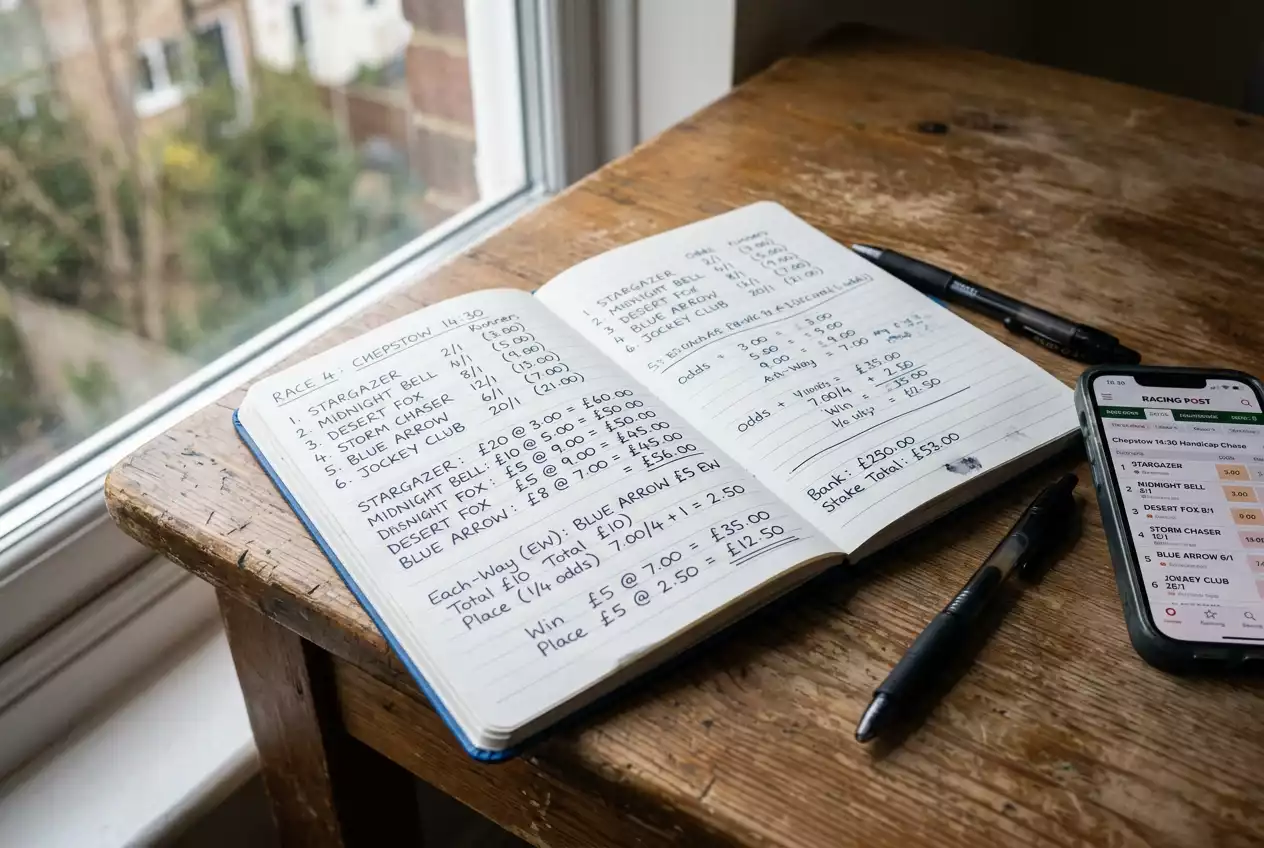
The first time I Dutched a race properly — three horses in a competitive twelve-runner handicap at Haydock — I remember the strange calm of watching the race unfold. I did not need one specific horse to win. Any of my three would do, and each would deliver the same profit. The second horse crossed the line first at 9/2, and I collected the same return I would have got from the first at 7/2 or the third at 6/1. Dutching does not eliminate risk, but it changes the emotional experience of a race entirely. The full picture is in our guide to UK horse racing betting.
Dutching is named after the notorious gangster Arthur “Dutch Schultz” Flegenheimer, who reportedly used the method on American racetracks in the 1930s. The principle is straightforward: back multiple horses in the same race, distributing your total stake across them so that whichever selection wins, you receive the same profit. It is not a magical system — it requires the combined implied probability of your selections to be below 100% — but in the right race conditions, it is one of the most practical tools available to a horse racing bettor.
The Dutching Formula and Stake Calculation
The maths behind Dutching is simpler than it looks, and once you have done it a few times, it becomes second nature. The goal is to calculate the individual stake for each horse so that the total return is identical regardless of which selection wins.
Start with decimal odds — they make the calculation cleaner. Suppose you want to Dutch three horses: Horse A at 4.50, Horse B at 6.00, and Horse C at 8.00. Your total budget for the race is twenty pounds.
First, calculate the implied probability of each selection. For decimal odds, that is 1 divided by the odds. Horse A: 1/4.50 = 0.2222. Horse B: 1/6.00 = 0.1667. Horse C: 1/8.00 = 0.1250. Sum of implied probabilities: 0.5139.
Next, calculate each horse’s stake as a proportion of the total. Horse A’s stake: (0.2222 / 0.5139) x 20 = 8.65 pounds. Horse B: (0.1667 / 0.5139) x 20 = 6.49 pounds. Horse C: (0.1250 / 0.5139) x 20 = 4.86 pounds. Total staked: 20.00 pounds.
Now check the returns. If Horse A wins: 8.65 x 4.50 = 38.93 pounds. If Horse B wins: 6.49 x 6.00 = 38.93 pounds. If Horse C wins: 4.86 x 8.00 = 38.93 pounds. The return is identical — 38.93 pounds total, yielding a profit of 18.93 pounds on a twenty-pound outlay, whichever horse wins.
The crucial check is that the sum of implied probabilities (0.5139 in this example) must be below 1.00. If it exceeds 1.00, you have created a guaranteed loss — you are Dutching selections whose combined probability, as priced by the market, already exceeds 100%, meaning the bookmaker’s margin has eaten your profit entirely. The lower that sum, the higher your potential return.
Worked Dutching Example on a Six-Runner Race
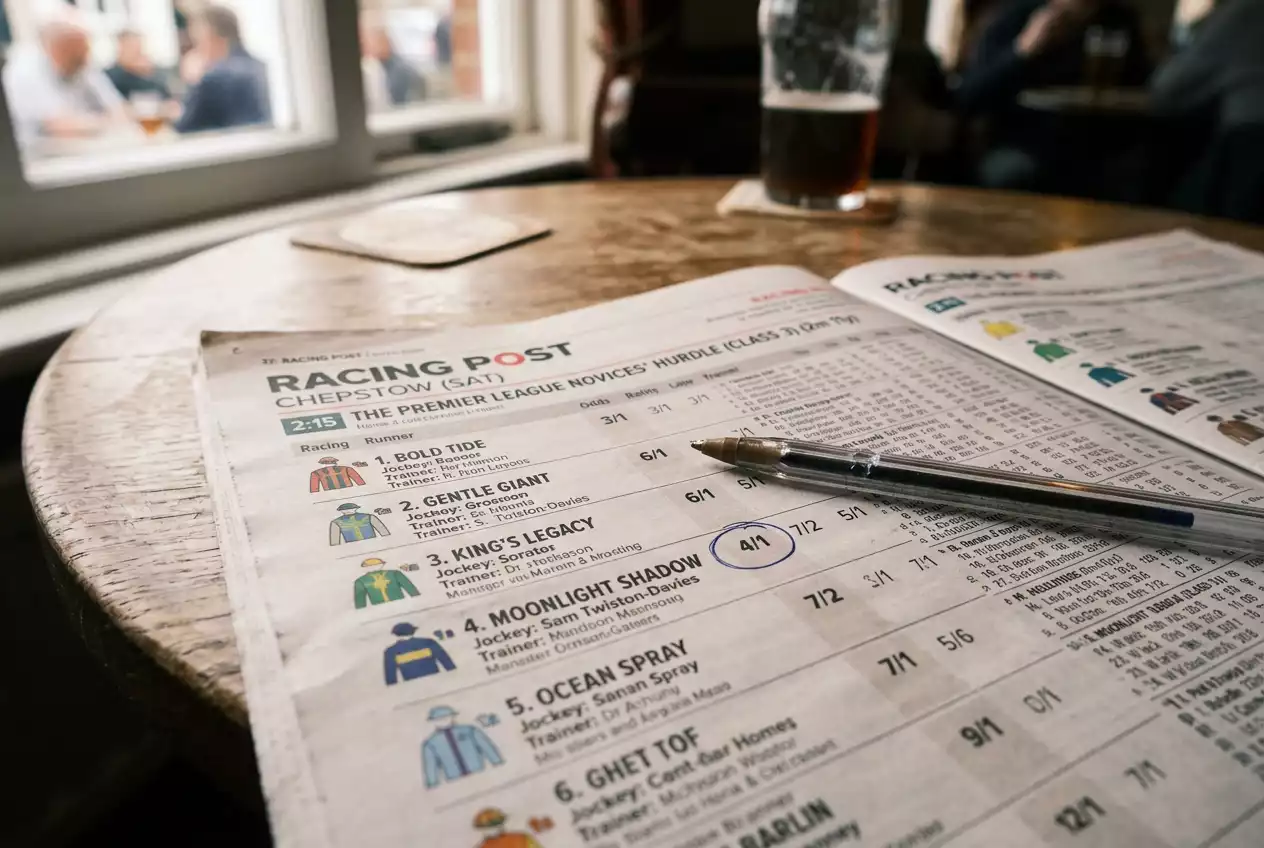
Let me walk through a more realistic scenario. It is a six-runner novice hurdle — the kind of race where smaller fields and exposed form make Dutching practical. Average field sizes on Jump racing dropped to 7.84 in 2025, so six-runner races are far from unusual.
The prices are: Horse 1 at 2.50, Horse 2 at 4.00, Horse 3 at 5.00, Horse 4 at 8.00, Horse 5 at 12.00, Horse 6 at 15.00. You have done your analysis and narrowed it to Horses 2, 3, and 4. Your total budget is thirty pounds.
Implied probabilities: Horse 2 = 0.2500. Horse 3 = 0.2000. Horse 4 = 0.1250. Sum = 0.5750.
Stake calculation: Horse 2 = (0.2500 / 0.5750) x 30 = 13.04 pounds. Horse 3 = (0.2000 / 0.5750) x 30 = 10.43 pounds. Horse 4 = (0.1250 / 0.5750) x 30 = 6.52 pounds. Total: 30.00 pounds (rounding adjusted).
Returns if any wins: Horse 2 at 4.00 = 13.04 x 4.00 = 52.17 pounds. Horse 3 at 5.00 = 10.43 x 5.00 = 52.17 pounds. Horse 4 at 8.00 = 6.52 x 8.00 = 52.17 pounds. Profit: 22.17 pounds from any of the three winning.
But what if the favourite (Horse 1 at 2.50) or one of the outsiders wins? You lose your entire thirty-pound outlay. Dutching is not risk-free — you are simply spreading your risk across multiple selections within a single race rather than concentrating it on one horse. If you have correctly identified the most likely winners, Dutching increases your probability of collecting a return. If your analysis is wrong, you lose more than you would on a single selection.
Race Scenarios Where Dutching Adds Value
Not every race is suitable for Dutching. In my experience, the method works best in three specific contexts, and poorly in most others.
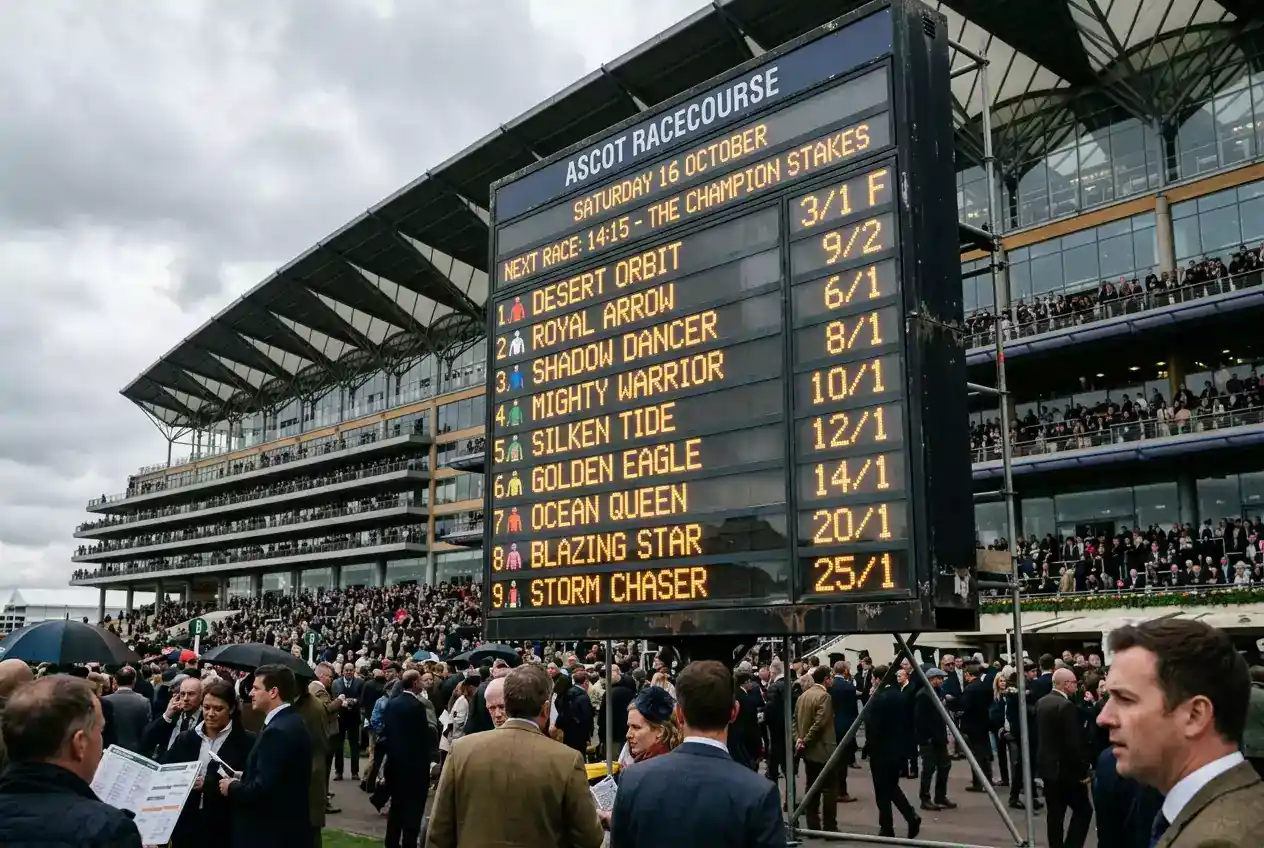
Competitive handicaps with open markets are ideal. When the betting shows three or four horses between 4/1 and 10/1 with no strong favourite, the market is essentially saying “we do not know who wins this”. Dutching lets you cover the most probable outcomes without committing to one. The average turnover per race on Premier fixtures held steady in Q1 2025 even as overall turnover dropped — Premier handicaps attract serious money, and the pricing tends to be more efficient, which paradoxically makes Dutching easier because the odds are more reflective of true probability.
Races where you have strong negative opinions also suit Dutching. Sometimes your analysis tells you a horse is overrated — the favourite has poor course form, or a well-backed runner is unsuited to the going. Rather than trying to identify one specific alternative, you Dutch the two or three horses you believe are more likely to benefit from the favourite’s weakness.
The method struggles in races with a dominant favourite. If one horse is 4/6 and the rest are 8/1 or bigger, Dutching the longer-priced runners means covering low-probability outcomes with high combined implied probability. The sums rarely work out favourably. It also struggles when you cannot narrow the field — Dutching five or six horses in a twenty-runner handicap spreads your stake so thin that the returns barely cover the outlay.
Dutching Calculators and Software Tools
You do not need to do these calculations by hand. Dozens of free Dutching calculators exist online, and several betting apps now include built-in Dutching tools. You enter the odds for each selection and your total budget, and the calculator spits out the optimal stake for each horse.
If you prefer spreadsheets, building a Dutching calculator takes about five minutes. Three columns — horse name, decimal odds, implied probability — and a formula row that divides each implied probability by the sum and multiplies by your total stake. I keep a template saved on my phone for quick reference at the racecourse.
Some exchange platforms offer Dutching functionality natively, allowing you to place multiple back bets with automated stake distribution. The advantage of doing this on an exchange rather than with a traditional bookmaker is that exchange odds are generally closer to the true probability (the market is peer-to-peer, with no built-in overround), which means the sum of your implied probabilities is more likely to stay well below 1.00. For a detailed look at how race weights and ratings shape the competitive picture in the kinds of races where Dutching works best, handicap betting mechanics add another layer of analysis. It only pays if the price is wrong: value betting.
A word of caution: do not let the convenience of a calculator replace the analysis. The calculator tells you how much to stake; it does not tell you which horses to back. Dutching is a staking method, not a selection method. The value — or lack of it — comes from the quality of your underlying assessment of the race.
What is Dutching in horse racing?
Dutching is a staking method where you back multiple horses in the same race and distribute your total stake so that whichever of your selections wins, you receive the same profit. It works by calculating each horse’s stake in proportion to its implied probability. The method is profitable when the combined implied probability of your selections is below 100%.
Can I Dutch selections across different bookmakers to get better odds?
Yes. If one bookmaker offers the best price on Horse A and another has the best price on Horse B, you can place separate bets at the best available odds and calculate your Dutching stakes across both accounts. This approach captures the best market price for each selection, which lowers the combined implied probability and increases your potential profit.
Prepared by the Racing Horse Betting editorial staff.