Each-Way Betting in Horse Racing: Mechanics, Terms and Value
 Available in US
I once watched a 20/1 shot finish second in a sixteen-runner handicap at Newbury and heard the bloke next to me groan about losing his bet. He had backed it to win. Had he gone each-way, he would have collected a tidy profit from the place part alone. That moment — repeated hundreds of times across British racecourses every week — is exactly why each-way betting exists and why understanding it properly can reshape your approach to horse racing. The full picture is in our guide to UK horse racing betting.
Each-way is one of the most popular bet types in UK racing, yet it is routinely misunderstood. I still get messages from readers who think it is a single bet with a safety net. It is not. It is two bets, charged as two stakes, with two distinct outcomes. Get the mechanics right, and each-way becomes one of the sharpest tools in your betting kit — particularly in big-field handicaps where average field sizes on the Flat sat at 8.90 runners in 2025 and large handicaps regularly attract fifteen or more.
How Each-Way Splits Into Win and Place
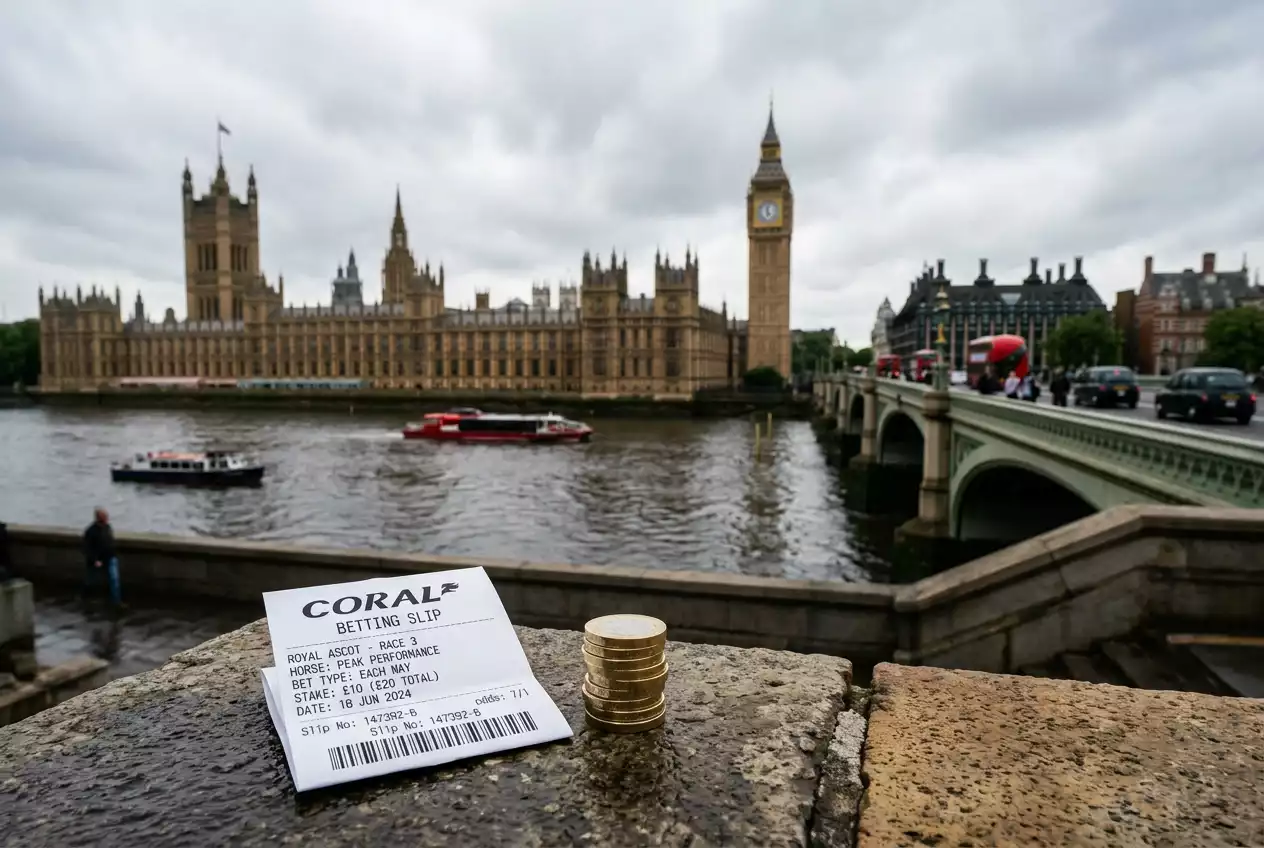
There is a moment of clarity that hits every punter when they realise each-way is not one bet. It is two. You are placing a win bet and a place bet simultaneously, each for the same stake. So a five-pound each-way bet costs you ten pounds total — five on the horse to win, five on the horse to place.
If your horse wins, both parts pay out. The win part pays at the full advertised odds. The place part pays at a fraction of those odds — usually one-quarter or one-fifth, depending on the race conditions. If the horse finishes in a place position but does not win, you lose the win part of your bet but collect on the place part. If the horse finishes outside the places, you lose both stakes.
This dual structure is what makes each-way so interesting from a value perspective. The win and place components behave differently depending on the odds, the field size, and the place terms on offer. A 10/1 shot finishing third in a race paying one-quarter the odds for three places returns 10/4 (or 5/2) on the place part — which means your five-pound place stake returns seventeen pounds fifty including the stake. You have lost five pounds on the win part, so your net profit is still seven pounds fifty from a horse that never won.
That last point is crucial. Each-way betting lets you profit from horses that finish close but not first, and in a sport where the favourite only wins roughly a third of the time, that flexibility matters enormously.
Place Terms by Field Size and Race Type
The place terms dictate how many finishing positions count as a “place” and what fraction of the win odds you receive for the place part. These terms vary by field size and are not entirely standardised — but the industry convention is consistent enough that you can memorise a handful of rules.
In races with two to four runners, most operators do not offer each-way at all. Some pay win only; a few pay the place at reduced odds for two runners, but it is rare and the terms are poor. Once you have five to seven runners, the standard is two places (first and second) at one-quarter the odds. With eight or more runners, the standard expands to three places (first, second, and third) at one-fifth the odds. In handicap races with sixteen or more runners, many operators extend to four places at one-quarter the odds — and this is where some of the best each-way value lives.
Festivals and feature meetings sometimes trigger enhanced terms. During Cheltenham, the Grand National, and Royal Ascot, operators frequently advertise extra places — paying out on five, six, or even seven places — as a promotional tool. These enhanced terms can significantly shift the expected value of an each-way bet, particularly on outsiders.
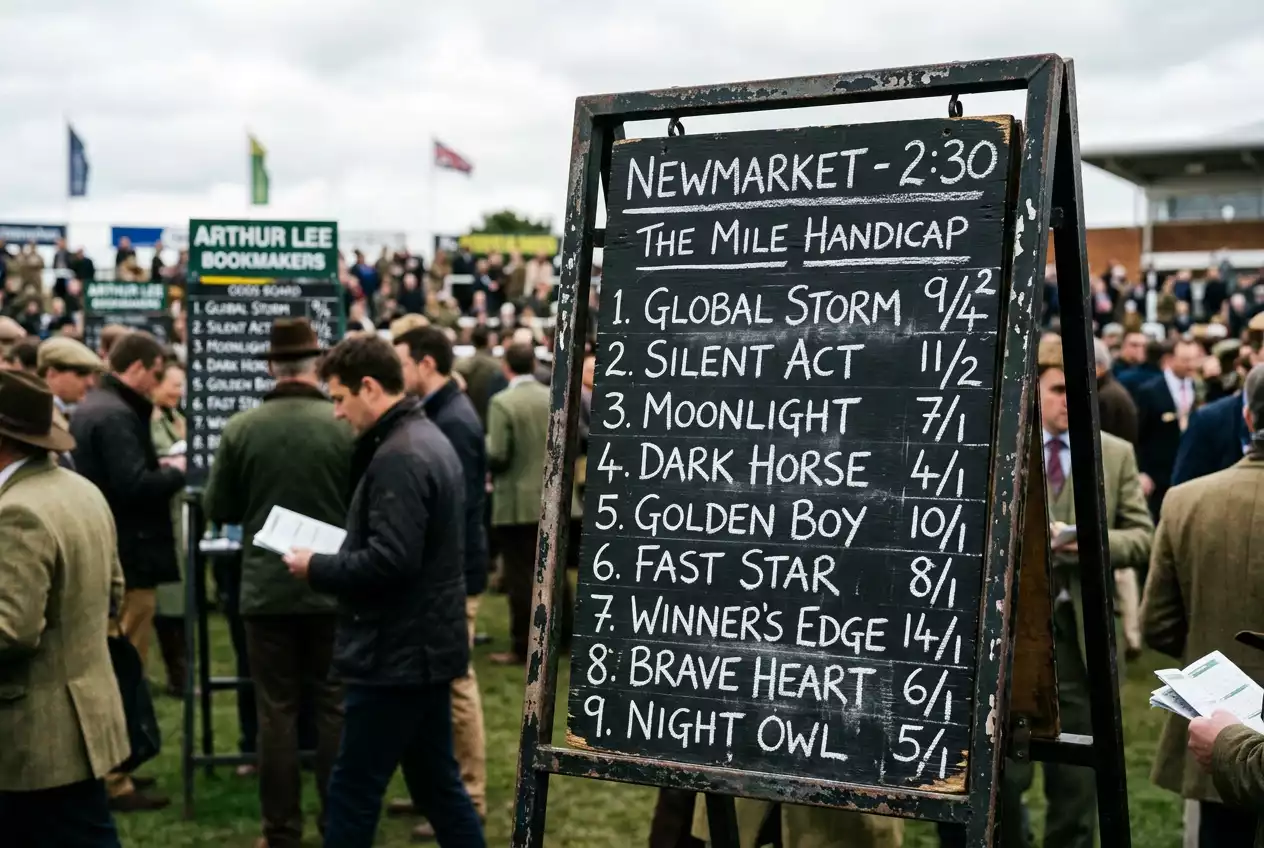
The fraction matters more than most punters realise. One-quarter the odds on a 12/1 shot gives you 3/1 for the place part. One-fifth the odds on the same horse gives you 12/5 (2.40 in decimal). Over hundreds of bets, that difference compounds into a meaningful gap in returns. Always check the terms before placing an each-way bet — they are displayed next to the race on every operator’s site, though you sometimes need to look for the small print.
Worked Payout Examples for Each-Way Bets
Numbers tell the story better than theory ever can, so let me walk through three scenarios I use when explaining each-way to anyone new to racing.
Scenario one: ten-runner handicap, each-way terms of three places at one-fifth the odds. You back a horse at 8/1 each-way for five pounds (ten pounds total). The horse wins. Your win part returns forty-five pounds (five pounds times 8/1 = forty pounds profit plus five pounds stake). Your place part pays at 8/5, so five pounds times 8/5 = eight pounds profit plus five pounds stake = thirteen pounds. Total return: fifty-eight pounds. Total profit: forty-eight pounds.
Scenario two: same race, same bet, but the horse finishes third. Win part loses — that is five pounds gone. Place part pays at 8/5: eight pounds profit plus five pounds stake = thirteen pounds returned. Your net position: thirteen pounds return minus ten pounds total stake = three pounds profit. A horse that finished third still made you money.
Scenario three: five-runner conditions race, each-way terms of two places at one-quarter the odds. You back a horse at 6/1 each-way for five pounds (ten pounds total). The horse finishes second. Win part is lost. Place part pays at 6/4: five pounds times 6/4 = seven pounds fifty profit plus five pounds stake = twelve pounds fifty. Net profit: two pounds fifty. Modest, but positive.
Now compare scenario three to a straight win bet of ten pounds at 6/1. The horse finishes second. You get nothing. The each-way structure cost you nothing extra in total stake but gave you a return from a near-miss. That trade-off — slightly lower profit if the horse wins, but profit from placed finishes too — is the heart of the each-way proposition.
When Each-Way Betting Offers Genuine Value
Not every race suits an each-way bet. I have spent years tracking where each-way returns cluster, and the pattern is clear: value concentrates in large-field handicaps with competitive, open markets and at least one horse at double-figure odds that has a realistic chance of placing.
In 2025, 68% of British racegoers were casual visitors or first-timers — many of them backing short-priced favourites in win-only bets. That behaviour inflates the win portion of the market for favourites and leaves the place market for longer-priced runners relatively undervalued. When the crowd piles money on the 2/1 favourite, the 14/1 shot with solid place credentials can offer excellent each-way terms.
Big-field handicaps at festivals are the classic hunting ground. A sixteen-runner handicap paying four places at one-quarter the odds gives you four chances to collect on the place part. If your selection is 16/1, the place part alone pays 4/1 — which means you only need to find a horse that places roughly one in five times to break even on the each-way bet over the long term. That is far more achievable than backing winners at 16/1, which requires winning about one in seventeen.
Where each-way betting struggles is in short-priced, small-field races. A 2/1 shot each-way in a five-runner race at one-quarter the odds gives you a place payout of 1/2 — half your stake as profit. If the horse finishes second, you lose five pounds on the win part and collect seven pounds fifty on the place part, netting minus two pounds fifty. You actually lose money on a placed finish. In this scenario, a straight win bet is almost always the sharper play.
The principle I apply after nine years in this niche: each-way works when the odds are long enough that the place fraction generates meaningful profit, and the field is large enough that placing is a realistic outcome. Below 5/1, I rarely bet each-way. Above 10/1 in fields of twelve or more, it becomes a serious weapon — especially when you understand how it interacts with other bet types like Lucky 15s and Yankees. Where each-way sits among the rest: the bet types.
Do all bookmakers offer the same each-way place terms?
No. While the industry convention is fairly standard — two places at one-quarter odds for five to seven runners, three places at one-fifth odds for eight or more — operators can and do vary their terms. Some offer enhanced places as promotions, particularly during major festivals. Always check the specific terms displayed next to the race before placing your bet.
Is each-way betting profitable in handicap races with large fields?
Large-field handicaps are where each-way betting tends to offer the strongest value. With sixteen or more runners, most operators pay four places at one-quarter the odds. Outsiders at double-figure prices can generate meaningful place returns even without winning. The maths becomes more favourable as field size increases and the place fraction rises.
What happens to my each-way bet if there are non-runners?
If non-runners reduce the field below the threshold for each-way terms, operators may alter the terms or suspend each-way betting entirely. If your specific horse is a non-runner, your stake is returned. If other horses are withdrawn after you have placed your bet, Rule 4 deductions may apply to your returns, reducing the payout proportionally based on the withdrawn horse’s odds.
Prepared by the Racing Horse Betting editorial staff.