How the Tote Works in Horse Racing: Pool Betting at UK Racecourses
 Available in US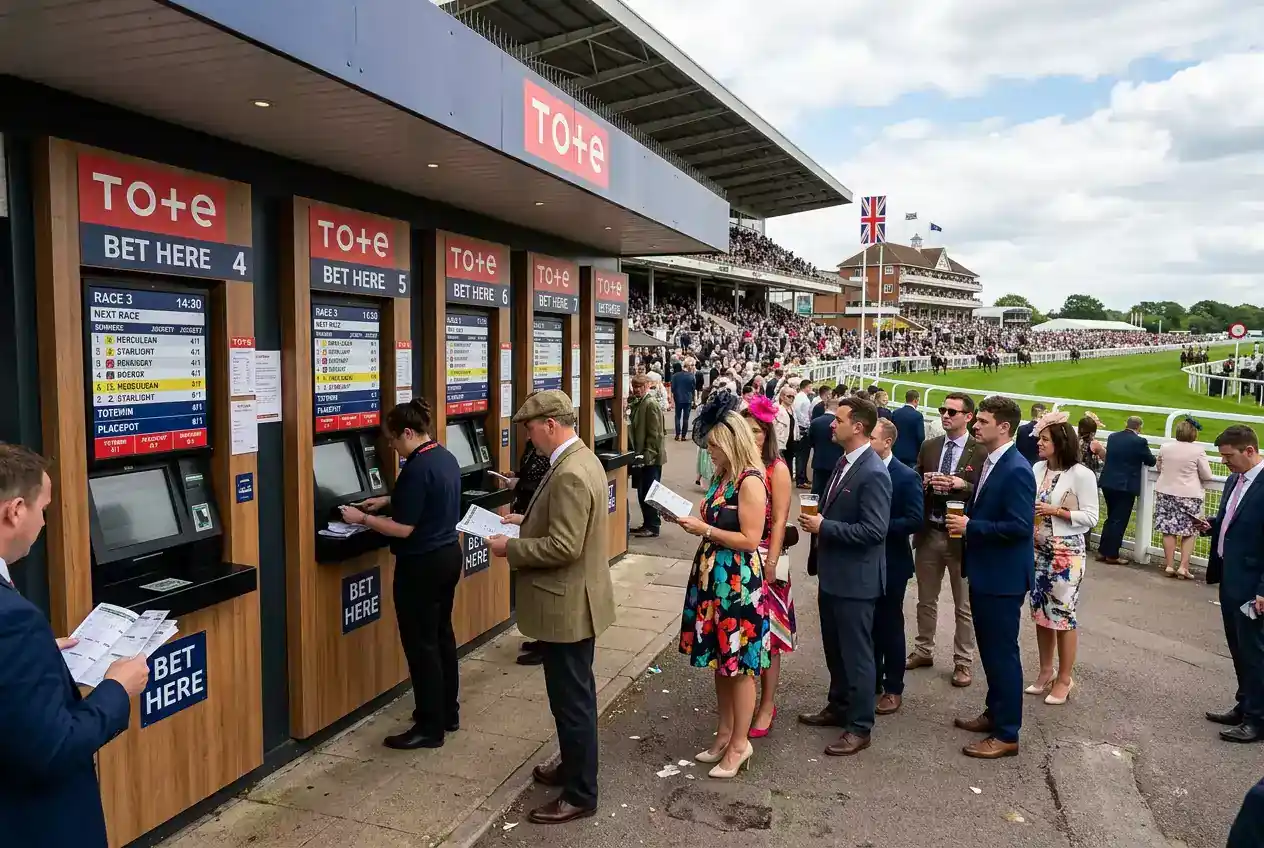
The first time I placed a Tote bet, I had no idea what my odds were. That was the point — and, oddly, the appeal. I was at Ascot, standing in a queue at a Tote window, and the clerk told me the final payout would depend on how much money went into the pool and how many people picked the same horse. It felt completely different from the certainty of a fixed-odds bet with a bookmaker. I placed a Placepot that afternoon with a two-pound stake and collected eighty-seven pounds. I have been fascinated by pool betting ever since. The full picture is in our guide to UK horse racing betting.
The Tote — formally known as UK Tote Group — operates as a pool betting system. Racecourse attendance hit 5.031 million in 2025, the first time the figure surpassed five million since 2019, and for the 68% of racegoers who are casual or first-time visitors, the Tote offers a distinctive entry point into racing betting that is fundamentally different from anything a bookmaker provides.
How Pool Betting Determines Payouts
Pool betting works on a principle that is the exact opposite of fixed-odds bookmaking. With a bookmaker, you know the price before you bet. With the Tote, the price is determined after the race.
Everyone who bets into a specific pool — say, the Win pool on the 3.15 at Newmarket — contributes to a collective pot. The Tote deducts its commission (the “takeout”, typically between 13% and 28% depending on the bet type), and the remainder is divided among the winning ticket holders. The more people who backed the winner, the smaller each share. The fewer people who backed it, the larger the payout.
This creates a dynamic where the Tote dividend (the payout per unit stake) can be dramatically higher or lower than the equivalent fixed odds. On a popular favourite, the Tote often pays less than the SP because so much money in the pool is concentrated on the same horse. On an outsider that nobody fancied, the Tote can pay significantly more — sometimes double or triple the SP — because the pool was divided among very few winning tickets.
The takeout percentage varies by bet type. The Win pool typically has the lowest takeout (around 13-14%), making it the most bettor-friendly pool. The Place pool is slightly higher. The exotic bets — Exacta, Placepot, Quadpot, Jackpot — carry higher takeouts (up to 28%) because the operational complexity and guaranteed minimum dividends require a larger margin. Even at 28%, the entertainment value of a Placepot costing two pounds and paying several hundred is difficult to argue with.
Tote Bet Types: Win, Place, Exacta, Placepot, Quadpot
Paddy Desmond, the chief revenue officer at The Tote, once observed that there is too much power in British racing with the racecourses, and because four separate racecourse bodies exist, they are not always aligned. The Tote sits in the middle of that complexity, offering a range of bets that overlap with but are distinct from what bookmakers provide.
The Tote Win bet is the simplest — back a horse to win, and your return depends on the pool dividend. The Tote Place bet pays if your horse finishes in the places (determined by field size, similar to bookmaker each-way terms). Both are straightforward and function as direct alternatives to fixed-odds equivalents.
The Exacta requires you to predict the first and second in the correct order. This is the Tote’s version of a straight forecast, and the dividends can be extraordinary in big fields when an outsider fills one of the first two positions. A two-pound Exacta on a 33/1 shot finishing first and a 10/1 shot finishing second might return several hundred pounds, depending on how few other punters picked the same combination.
The Placepot is the Tote’s signature bet. You select a horse to place in each of the first six races on a card. If all six selections place, you share the Placepot pool. The beauty of the Placepot is that you can perm multiple horses in each race for a relatively small increase in cost. A two-pound Placepot with two selections in each of six races costs 128 pounds (2 x 2 x 2 x 2 x 2 x 2 x 2) — but a simpler approach, one selection per race with a two-pound stake, costs just two pounds. The Placepot pays out regularly to a decent level and has become the bet that many casual racegoers associate with a day at the track.
The Quadpot works on the same principle but covers the last four races on a card. The Jackpot — predicting the winner of all six races — is the hardest pool bet to land but carries the largest dividends, often rolling over across meetings when no one picks all six winners.
Tote Odds vs Fixed-Odds Bookmaker Prices
The comparison between Tote dividends and bookmaker SP is one I track regularly, and the patterns are consistent. On short-priced favourites, the Tote usually pays less than the SP. On mid-range runners (roughly 5/1 to 12/1), the Tote and SP are broadly similar. On outsiders at 16/1 and above, the Tote frequently pays more — sometimes substantially more.
This makes the Tote a particularly interesting option in big-field handicaps where you are backing longer-priced runners. If your analysis points to a 20/1 shot in a twenty-runner handicap, the Tote Win dividend may well exceed the fixed-odds SP because a smaller proportion of the pool will have backed that horse. Over time, I have found that consistently using the Tote for long-priced selections in big fields generates a small but measurable advantage compared with taking the SP.
The trade-off is uncertainty. With a bookmaker, you lock in a price. With the Tote, you accept whatever the pool produces. You cannot calculate your return before the race, and if a late surge of money goes onto your horse in the pool, the dividend shrinks. That lack of price certainty is a dealbreaker for many experienced punters who want to know their edge before committing. For the rest, it adds to the fun — and the occasional windfall when the pool delivers a dividend that no bookmaker would have offered.
The Tote is also available online, not just at the racecourse. You can place Tote bets through the Tote’s own website and app, and several bookmakers offer Tote pools alongside their fixed-odds markets. This means you can compare the likely Tote dividend with the bookmaker price and choose whichever offers better value — though the Tote dividend is only an estimate until the pool closes. For a broader comparison of how different betting structures affect your returns, the mechanics of exchange betting offer yet another pricing model to weigh against both bookmakers and the Tote. The alternative to pool prices: betting exchanges.
How does the Tote work and how is it different from bookmakers?
The Tote operates a pool betting system. All stakes go into a pool, the Tote deducts a commission, and the remaining money is shared among winning ticket holders. Unlike a bookmaker, where you know the price before betting, the Tote dividend is determined after the race based on how the pool money was distributed. This means outsiders can pay more than their bookmaker odds, while favourites may pay less.
Can I place Tote bets online or only at the racecourse?
You can place Tote bets both online and at the racecourse. The Tote has its own website and app where you can access all pool bets, and several major bookmakers also offer Tote pools alongside their fixed-odds markets. Online pools are combined with on-course pools, so the overall pool sizes and dividends are the same regardless of where you place your bet.
Created by the ”Racing Horse Betting” editorial team.