Horse Racing Betting Apps: Features That Matter for UK Punters
 Available in US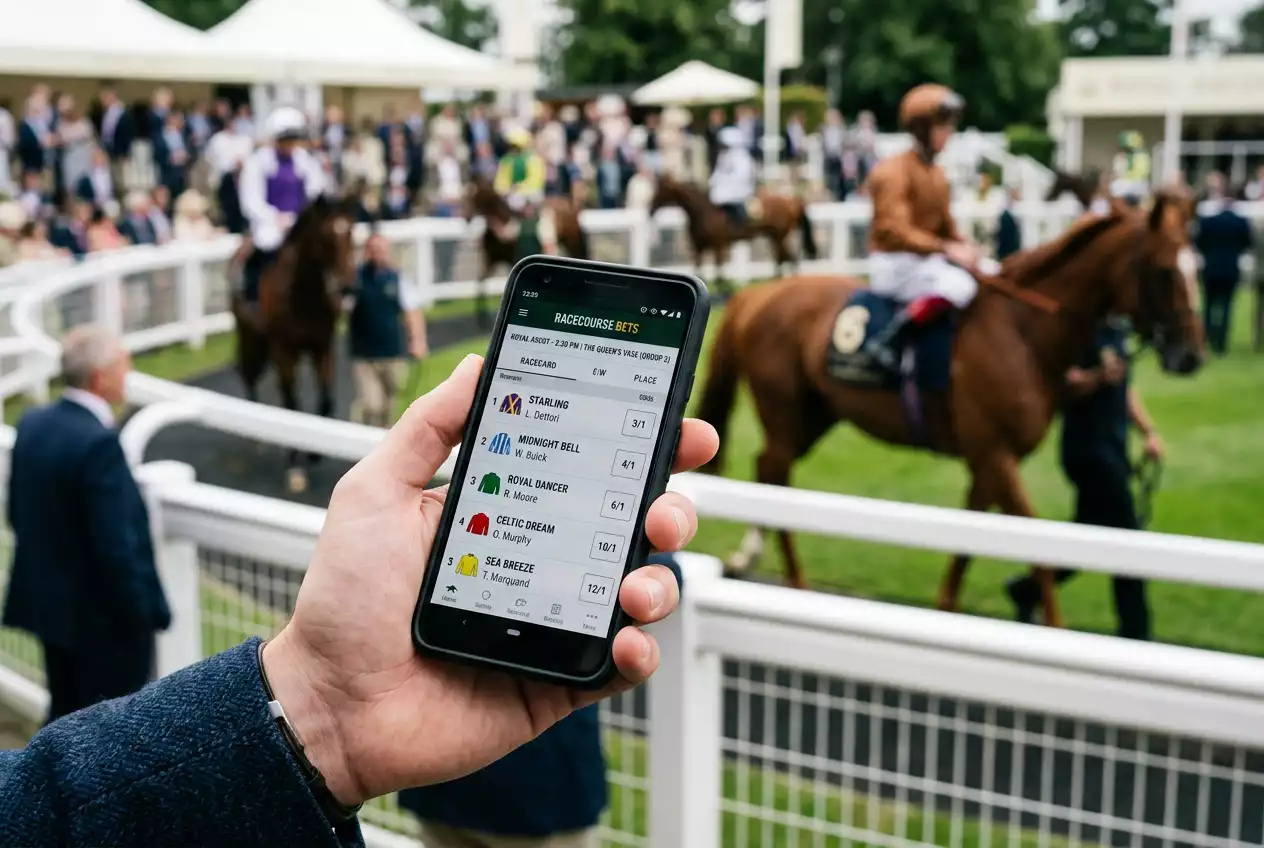
I placed my first mobile horse racing bet in 2018 on an app that froze three times before accepting my wager. The race had already started by the time the bet slip confirmed. Two years later, a different app let me study the form, watch a live stream, place a bet, and cash out mid-race — all within sixty seconds. The gap between a mediocre racing app and a good one is not a minor inconvenience; it is the difference between capturing a price and missing it entirely. The full picture is in our guide to UK horse racing betting.
Over 60% of mobile users globally now gravitate towards platforms offering predictive analytics and real-time data feeds. In the UK, where online betting accounts for the majority of racing wagers, the app is effectively the shopfront. What it offers, how fast it runs, and how reliably it performs under pressure on a busy Saturday afternoon determines your experience as a punter far more than the brand name on the splash screen.
Essential Features for Horse Racing Bettors
Not all betting apps are built with horse racing in mind. Some are football-first platforms where racing is an afterthought — you can find it, but the interface is not designed for it. After nine years of testing every major UK operator’s app, I have a clear hierarchy of features that matter specifically for racing.
Live streaming is non-negotiable. If the app does not let you watch races without switching to a separate screen or external player, it is already behind. The best racing apps embed the stream directly alongside the racecard and bet slip, so you can watch a race, check your bet, and see the odds moving simultaneously. Online channels accounted for over 65% of horse racing betting turnover in the UK even before mobile became dominant, and that share has only grown.
Integrated racecards with form data save enormous amounts of time. An app that shows you not just the runners and odds but also recent form figures, going preferences, trainer-jockey statistics, and course form — all within the same screen — eliminates the need to tab between multiple apps or websites. Some operators now include speed ratings, RPR equivalents, and even sectional timing data. If you are doing serious form analysis on the move, this level of integration is transformative.
Best Odds Guaranteed should be clearly displayed and automatically applied. An app that buries BOG in the terms and conditions rather than highlighting it on the racecard is doing its racing customers a disservice. The best operators make BOG visible next to each horse’s price, so you know before placing your bet that you are covered.
Quick bet placement matters more than it sounds. On a busy card, markets move rapidly in the minutes before a race. An app that requires four taps to place a win bet — select horse, confirm odds, enter stake, press “Place Bet” — is adding friction that costs you seconds. My preference is a two-step process: select and stake on one screen, confirm on a second. Fast enough to capture prices, slow enough to catch mistakes.
Speed, Stability and Usability on Race Day
Features mean nothing if the app crashes when you need it most. I have experienced app failures on Gold Cup day, on Grand National Saturday, and on a random Tuesday at Lingfield that happened to coincide with a server issue. Each time, the experience was the same: frustration, missed bets, and a mental note to have a backup account open.
Stability under load is the hardest thing to test before you need it. Major operators invest heavily in server infrastructure for peak days, but mid-tier apps sometimes buckle when thousands of users simultaneously place bets in the minutes before a feature race. My approach is pragmatic: I maintain funded accounts with at least two operators so that if one app goes down, I can switch to the other within seconds.
Usability specifics matter for racing. The font size on odds displays should be large enough to read in bright outdoor light — if you are at the racecourse, you are likely squinting at your phone in sunshine or rain. Navigation between races on the same card should be a swipe or a single tap, not a multi-step journey back through menus. The bet slip should persist when you switch between races, so you can build multiples without losing your first selection when you navigate to a different event.
Cash-Out and Partial Cash-Out for Racing Bets
Cash-out is one of those features that divides opinion sharply. Some punters love the control it offers; others, myself included, treat it with caution because the maths rarely favours the bettor.
Cash-out lets you settle a bet before the race finishes (or, in ante-post markets, before the race even takes place). The operator calculates a cash-out value based on the current odds and offers you that amount in exchange for closing your bet. If you backed a horse at 10/1 and it is now trading at 4/1 in the ante-post market, the cash-out value will reflect some of that price movement — but not all of it. The operator builds a margin into every cash-out offer.
Partial cash-out refines this by letting you cash out a percentage of your bet while leaving the rest running. Back a horse at 10/1 for ten pounds. The cash-out offer is thirty pounds. You partially cash out fifty percent — fifteen pounds returned — while leaving five pounds of your original stake active at 10/1. If the horse wins, you still collect from the remaining stake. If it loses, you have banked fifteen pounds.
I use cash-out sparingly — mainly on ante-post bets where circumstances have changed and I no longer believe in the selection. I almost never cash out during a race because the mid-race cash-out values are heavily discounted. The operator knows more about the live probability than you do (especially with streaming delays), and the price reflects that information asymmetry.
Security and UKGC Compliance in Mobile Apps
Every legitimate horse racing betting app available in the UK operates under a licence from the UK Gambling Commission. This is not optional — it is a legal requirement. The licence mandates specific standards around data protection, fund segregation, and responsible gambling tools.
Fund segregation means your deposits are held separately from the operator’s own funds, protecting you in the event of insolvency. Not all operators segregate at the highest level, but the UKGC requires a minimum standard. You can check any operator’s licence status on the UKGC’s public register, and I recommend doing so before downloading any app — particularly for less well-known brands.
Responsible gambling tools in apps have improved markedly. Deposit limits, loss limits, session time reminders, reality checks, and self-exclusion options are all standard. The best apps make these tools accessible from the main menu rather than burying them in settings. If you find yourself looking for these tools and struggling to locate them, that is a red flag about the operator’s priorities.
Two-factor authentication, biometric login, and encrypted connections should be default expectations, not premium features. Your betting account contains personal data and financial information — treat app security with the same seriousness you would treat your banking app. For a broader look at how streaming quality ties into your mobile experience, the live streaming options available through UK apps are directly connected to your choice of operator. One feature worth checking first: Best Odds Guaranteed.
What features should I prioritise in a horse racing betting app?
Live streaming, integrated racecards with form data, Best Odds Guaranteed clearly displayed, fast bet placement, and reliable performance on busy race days. These features directly affect your ability to make informed bets at the right price. Responsible gambling tools — deposit limits, session reminders, self-exclusion — should also be accessible from the main menu.
Is it safe to deposit money through a horse racing app?
Yes, provided the app is operated by a UK Gambling Commission-licensed bookmaker. Licensed operators are required to use encrypted connections, segregate customer funds, and meet strict data protection standards. Check the operator’s licence status on the UKGC public register before depositing, and use biometric login or two-factor authentication for additional security.
Published by the Racing Horse Betting team.