
Betting on Royal Ascot: Draw, Form and Five-Day Strategy
 Available in US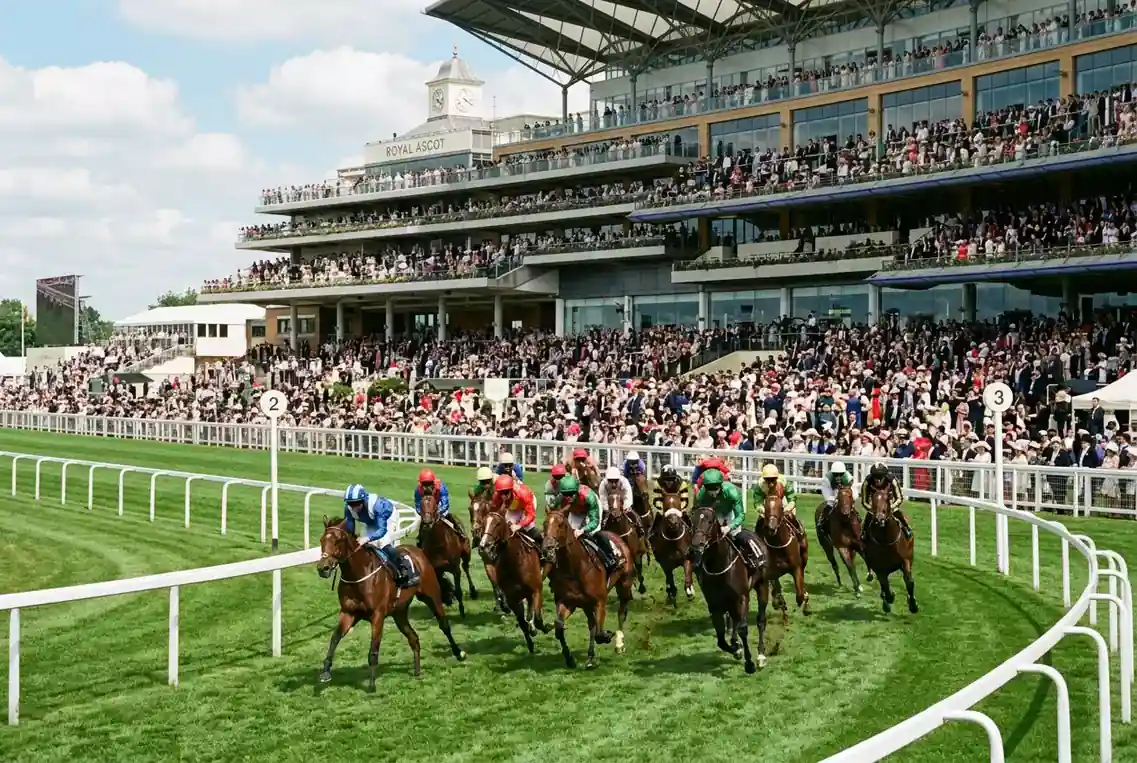
Royal Ascot sits at the intersection of sport, spectacle, and serious betting. Five days of the finest Flat racing in Europe, broadcast to five million ITV viewers in 2025 with the final day’s audience surging over 20% year on year. The top hats and morning suits disguise the fact that this is one of the most analytically demanding betting weeks of the entire calendar. Thirty races across five days, mixing Group 1 championship events with ultra-competitive handicaps, on a course where draw bias, ground conditions, and race pace interact in complex ways. The full picture is in our guide to UK horse racing betting.
I have bet on every Royal Ascot meeting since 2017, and the lesson that took longest to learn was restraint. The card is so rich, the atmosphere so intoxicating, that the temptation to bet on every race is overwhelming. The years I have done best at Ascot are the years I have been most selective — backing five or six strong opinions across the week rather than scattering money across all thirty races.
Five Days of Racing: Groups, Handicaps and Heritage
Royal Ascot’s programme blends championship-quality Group 1 races with some of the most competitive handicaps in British Flat racing. Tuesday opens with the Queen Anne Stakes over a mile and includes the Coventry Stakes for two-year-olds. Wednesday features the Prince of Wales’s Stakes, one of the strongest middle-distance races of the year. Thursday is Gold Cup day — the stamina test over two and a half miles that defines Royal Ascot’s identity. Friday and Saturday round out the week with a mix of sprint championships and high-class handicaps.
The handicaps deserve particular attention from bettors. The Royal Hunt Cup (mile handicap, typically twenty-plus runners), the Wokingham (six-furlong sprint handicap), and the Britannia Stakes (mile handicap for three-year-olds) are betting events in their own right. Fields are large, place terms are generous, and the quality is high — these are not afterthought races; they are fiercely competitive events where value hides for those willing to do the work.
Draw Bias at Ascot: Straight Course vs Round Course
Ascot runs races on two distinct track configurations, and the draw dynamics differ between them. The straight course — used for races up to a mile — runs directly away from the stands, and in certain conditions, a pronounced draw bias can develop. Average field sizes on the Flat sat at 8.90 in 2025, but Royal Ascot handicaps regularly exceed that figure, making the draw even more influential.
On the straight course, the bias depends primarily on the going. In soft or heavy conditions, one side of the track tends to ride faster — historically the stands’ side (high numbers) has been favoured in some years, while the far side (low numbers) has dominated in others. The direction of the bias can shift from year to year and even from day to day within the same meeting, depending on where the ground has been watered, where previous races have chewed up the surface, and where natural drainage channels sit beneath the turf.
The round course, used for races beyond a mile, negates some of the draw bias because the field negotiates a turn that shuffles positions before the long straight. High-drawn horses on the round course are at a slight disadvantage in larger fields because they are forced wider around the bend, but the effect is less dramatic than on the straight course.
My approach: I watch the first race on the straight course each day as a data-gathering exercise. Which side did the leaders race on? Did the runners spread across the track or cluster on one side? Did the winner come from a high or low draw? This real-time information is immediately actionable for subsequent straight-course races later on the same card.
Form and Class Patterns at Royal Ascot
Royal Ascot attracts the best horses in Europe, and the form analysis required is correspondingly rigorous. In Group 1 races, you are often comparing horses from different countries who have raced on different surfaces in different conditions. A horse that won a Group 1 in France on heavy ground may face a very different test at Ascot on good to firm.
Richard Wayman, the BHA’s director of racing, noted that major meetings performed strongly in 2025 and would play a pivotal role in attracting fans at all levels. Royal Ascot exemplifies this — the quality draws the audience, and the audience sustains the prize money that attracts the quality. For bettors, this means the form book is deep and the market is efficient. Finding value in the Group 1s is hard because the horses are well known, the form is extensively analysed, and the prices are tight.
The handicaps are where analytical edge pays off. Horses stepping up in class from Listed or Group 3 company into a Royal Ascot handicap face a quality test that not all pass. But horses that have been specifically targeted at a Royal Ascot handicap — campaigned at a lower level to keep their handicap mark manageable, then aimed at the big prize with a well-prepared rating — can be the smart money’s friend. Trainers who specialise in placing horses for Royal Ascot handicaps are worth tracking year on year.
International form adds complexity but also opportunity. Runners from France, Ireland, Australia, Japan, and the Middle East compete at Royal Ascot, and cross-country form comparisons are imprecise. The market sometimes overvalues or undervalues international runners based on limited information, and these mispricings are where the prepared bettor can find genuine value.
Two-year-old races at Royal Ascot carry a specific dynamic that experienced bettors learn to respect. The Coventry Stakes, the Norfolk, the Albany, and the Queen Mary are all run by horses with very limited racecourse experience. Some have had just one or two runs. The form sample is tiny, which means the market is pricing these runners on reputation, breeding, trial form, and trainer signals rather than a deep body of evidence. This creates more variance and more opportunities to disagree with the market — but also more risk of being wrong, because the unknowns are genuine. I tend to stake smaller on juvenile races and focus on horses whose single run was visually impressive rather than merely numerically fast. For a deeper understanding of how draw position interacts with pace and course layout, the full draw bias analysis provides the statistical foundation for Ascot’s straight-course races. Ascot’s draw matters more than most: draw bias.
Does the draw matter more at Royal Ascot than at other UK courses?
On Ascot’s straight course (races up to a mile), the draw can be very significant, particularly in soft conditions and large fields. The bias varies year to year and can shift within the meeting. On the round course (races beyond a mile), the effect is smaller because the bend reshuffles positions. Monitoring which side of the straight course is favoured on each day is a key part of Royal Ascot analysis.
Are Group 1 races at Royal Ascot harder to bet on than handicaps?
Generally, yes. Group 1 runners are well-known, heavily analysed, and accurately priced. The market for these races is highly efficient, leaving little room for value. Handicaps, with their larger fields, more varied form lines, and trainer-placement strategies, tend to offer more frequent mispricing and better opportunities for bettors who do thorough preparation.
Published by the Racing Horse Betting team.