
Horse Racing Course Guide: How Track Characteristics Affect Betting
 Available in US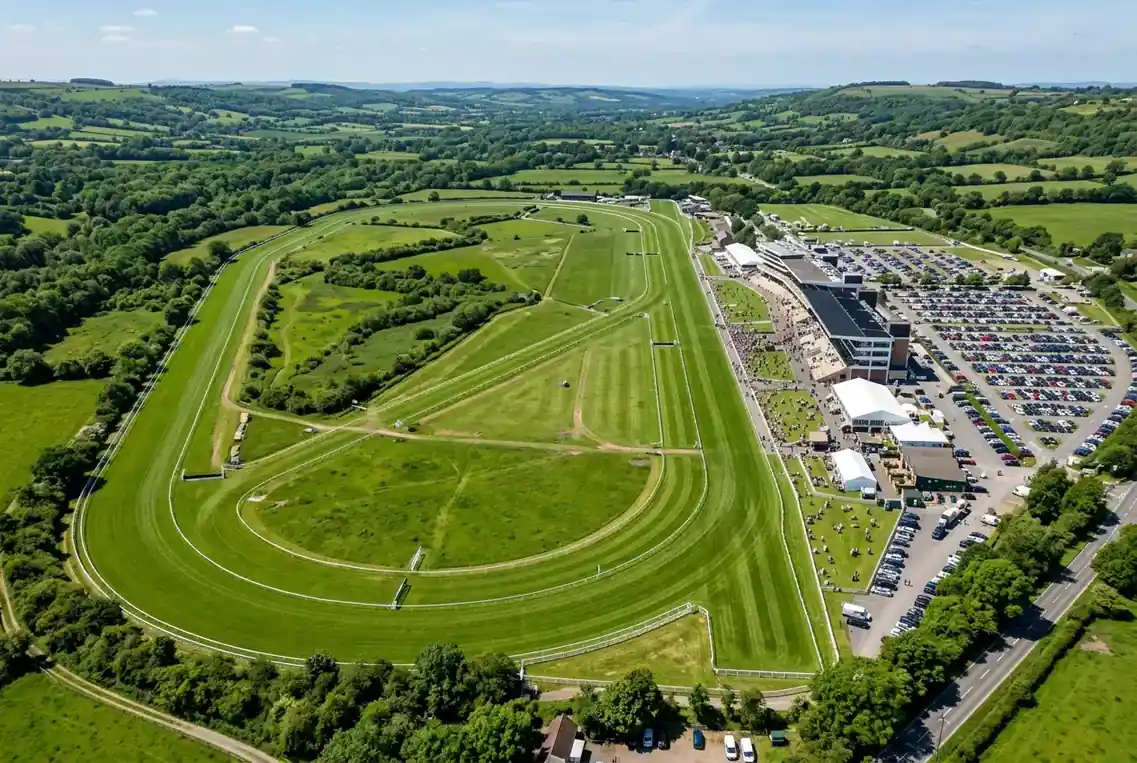
Newmarket and Chester are both flat racecourses in England. They could not be more different. Newmarket’s Rowley Mile is wide, galloping, with long straights that reward horses with sustained speed. Chester is a tight left-handed oval barely a mile in circumference where position and the inside rail matter more than raw ability. A horse that wins easily at Newmarket might be hopelessly compromised at Chester, and vice versa. Knowing the track is not optional — it is fundamental to assessing any horse’s chance. The full picture is in our guide to UK horse racing betting.
Britain has sixty active racecourses, each with its own character. Some are sharp and favour front-runners. Some are stiff and reward strong finishers. Some have pronounced undulations that test a horse’s balance. Others are flat and fast. The number of races starting within two minutes of their scheduled time rose to 87.6% in 2025 — up from 79.2% in 2024 — reflecting operational improvements across these venues. But the physical characteristics of each track remain constant, and they shape race outcomes in ways that form figures alone do not capture.
Track Shape: Galloping vs Tight Courses
The single most important distinction between British racecourses is whether they are galloping or tight. Galloping tracks have long straights, wide bends, and plenty of room for horses to stride out. Tight tracks have sharp turns, short straights, and limited space for manoeuvre. The difference directly affects which horses perform well.
Galloping courses — Newmarket, Ascot, York, Doncaster, Newbury — suit horses with a long, flowing stride who can build momentum on the straight and sustain their speed over the final two or three furlongs. These tracks reward raw ability and finishing speed. Horses that need time to hit top gear thrive here because they have the room and the distance to do so.
Tight courses — Chester, Beverley, Brighton, Epsom, Pontefract — demand agility, tactical speed, and the ability to handle sharp bends without losing momentum. Horses drawn on the inside or positioned near the rail have a structural advantage on tight tracks because they cover less ground. Front-runners also tend to fare well on tight courses because the bends make it harder for horses to launch wide, sweeping challenges.
Some courses defy easy categorisation. Epsom combines a sharp, descending turn into the straight with a demanding uphill finish and pronounced camber — making it one of the most unique tracks in the world. Success at Epsom requires specific physical attributes (balance, the ability to handle a left-hand camber at speed) that are not tested anywhere else. The Derby is famously hard to predict partly because Epsom’s track characteristics eliminate horses that would win comfortably on a more conventional course.
Hills, Gradients and Stamina Tests
British racecourses vary dramatically in elevation. Some are flat as a pancake (Kempton’s all-weather, Wolverhampton). Others feature significant climbs that turn the final furlong into a stamina test that no amount of speed can overcome.
Cheltenham’s uphill finish is the most famous example. The final climb from the last fence to the winning post is relentless, and horses that are tiring hit a wall. Cheltenham rewards stamina, jumping ability, and genuine toughness. A horse that looks to be going well turning into the straight can empty in the final hundred yards if it lacks the stamina to handle the hill. Bettors who back horses with proven stamina at Cheltenham consistently outperform those who rely solely on speed figures from flatter tracks.
Goodwood’s track rises and falls across its length, with a pronounced dip that can unbalance horses mid-race. Sandown’s finish is uphill. Catterick is a sharp, undulating track that catches out horses used to flatter venues. Each of these elevation profiles favours different types of runners, and a horse’s course form is often more predictive than its overall record precisely because track characteristics are so varied.
Course Form and Why It Matters
Course form — a horse’s record at a specific venue — is one of the most reliable predictors available. If a horse has won three times at Haydock and never placed at Kempton, that pattern is telling you something about how the horse interacts with the specific demands of each track.
I weight course form heavily in my analysis. A horse returning to a course where it has previously performed well gets an automatic upgrade in my probability estimate. The logic is straightforward: the track characteristics that suited the horse before have not changed. The ground drainage, the camber, the bend tightness, the run-in length — all of these are fixed. If a horse’s running style and physical attributes match the track profile, that advantage persists across visits.
The corollary is equally important: a horse with no form at a specific course is an unknown quantity at that venue. Even if its overall form is strong, the absence of course form introduces uncertainty. That uncertainty should be reflected in your probability estimate — a slight downgrade, not a dismissal, but enough to factor the unknown into your assessment.
Distance and the Track Connection
Distance suitability is inseparable from course suitability. A mile at Ascot — where the run-in from the final bend to the finish is long and stamina-testing — is a different challenge from a mile at Chester, where the tight turns reward tactical speed and the short straight leaves little room for late closers. The same horse might be suited to a mile at one course and need further at another, simply because of how the track shapes the race.
I always cross-reference course form with distance form. A horse with a winning record over seven furlongs at Newmarket might be worth backing at the same distance at other straight-course tracks like Ascot or Doncaster, but less reliable at Beverley or Brighton where the configuration is fundamentally different. The interaction between track shape and trip length is where the subtlest insights hide — and where the most consistent edges are found.
Racecourse attendance hit 5.031 million in 2025, and the punters in those crowds are watching races at venues with distinct characters. Whether you are analysing from a sofa or standing in the ring, the track is the constant — it does not change between visits, and the horses that suit it tend to keep suiting it. Building a mental map of British racecourses and their key characteristics is one of the best investments of time a bettor can make. For another fixed factor that interacts with track layout, how draw bias operates at specific courses adds a complementary layer to this analysis. On the Flat the stall matters too: draw bias.
Why does course form matter in horse racing betting?
Each British racecourse has unique physical characteristics — track shape, camber, undulations, run-in length, and drainage. Horses that suit these characteristics tend to perform well repeatedly at the same venue. A horse’s record at a specific course is therefore one of the most reliable predictors of future performance there, often more predictive than its form at other tracks.
What is the difference between a galloping track and a tight track?
Galloping tracks have long straights and wide, sweeping bends that allow horses to stride out and build momentum. They reward sustained speed and finishing power. Tight tracks have sharp turns and shorter straights, favouring horses with tactical speed, agility, and the ability to hold a position on the rail. Horses suited to one type often struggle at the other.
Created by the ”Racing Horse Betting” editorial team.